

cost of clothing manufacturing india 2025 | Full Price Breakdown
What does clothing manufacturing in India actually cost? Get an honest 2025 breakdown by garment type, MOQ, fabric, and shipping — with real numbers. cost of clothing manufacturing india
BRAND BUILDING GUIDES
Ashanari Manufacturing Team
4/13/20265 min read
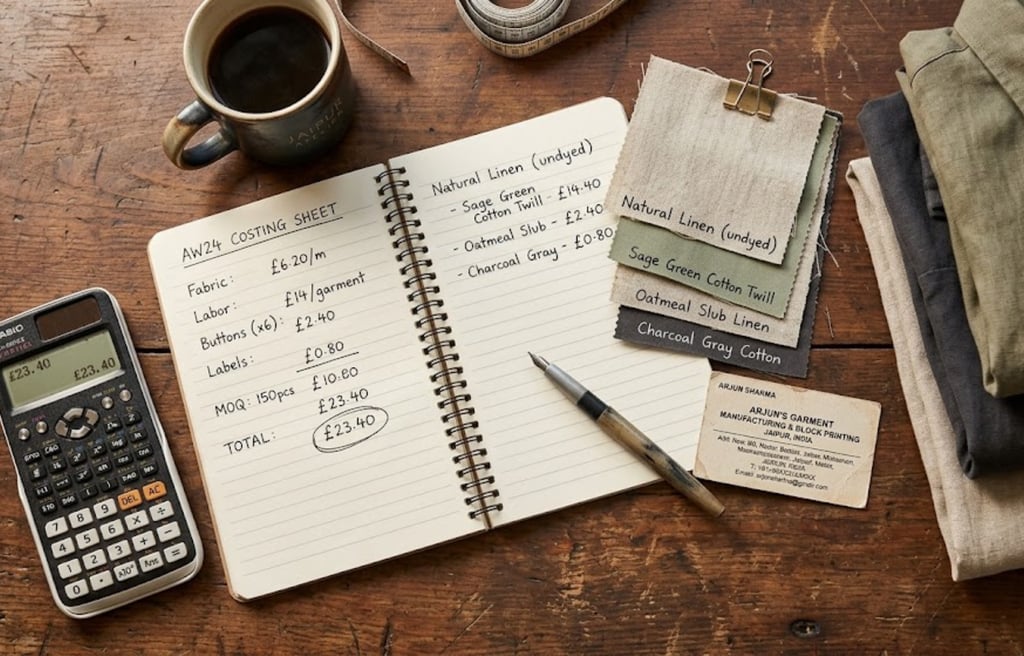
How Much Does It Cost to Manufacture Clothing in India?
(2025 Honest Price Breakdown)
The most common question we receive from brand founders researching Indian clothing manufacturing is also the most important one: What is it actually going to cost me? Not a vague range. Not "it depends." Real numbers can be used to build a business plan.
This guide gives you exactly that — a comprehensive, transparent breakdown of clothing manufacturing costs in India for 2025. Fabric, labour, sampling, shipping, import duties, and packaging. Everything, honestly, in one place.
Note on pricing:
All figures in this guide are indicative ranges based on real 2025 production data from Jaipur-based manufacturing. Actual costs vary based on design complexity, fabric choice, order quantity, construction technique, and finish quality. Use these figures for planning — confirm specifics with your manufacturer during quoting.
40–60%
Lower cost vs EU/UK domestic production
£8–£45
Typical per-unit production cost range
3–5×
Typical markup from production to retail
50
Minimum viable units for cost efficiency
Understanding the Components of Clothing Manufacturing Cost
The total cost of manufacturing a garment in India is built from six distinct cost components. Understanding each one gives you clarity and negotiating power.
1. Fabric Cost (typically 40–55% of total production cost)
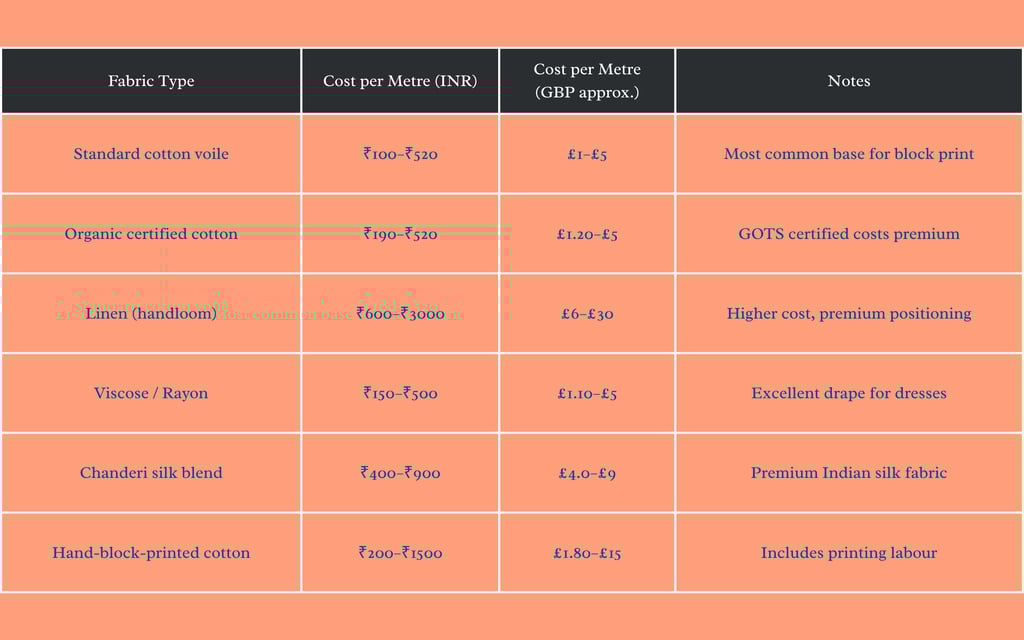
Fabric is the largest single cost component. Prices vary enormously by material type, weight, and quality tier. In Jaipur and Rajasthan, there's exceptional access to cotton (standard and organic), linen, viscose, chanderi, and handloom fabrics at very competitive prices. Below are indicative per-metre costs for common fabric types in India:
A standard dress uses approximately 2–3 metres of fabric; a shirt 1.5–2 metres. These figures give you a baseline for fabric cost per garment before you add any other costs.
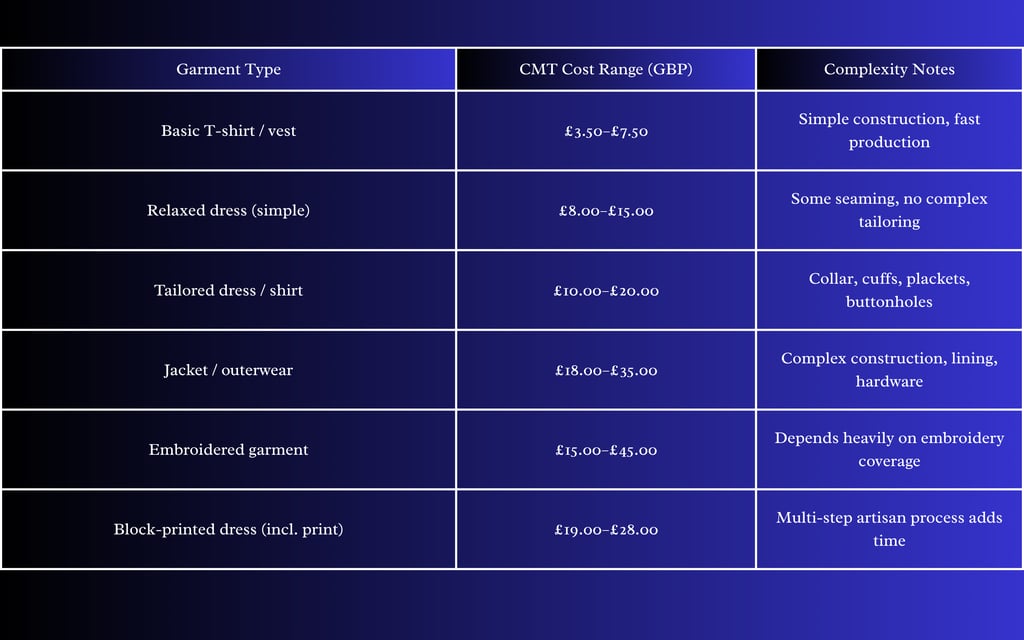
2. Labour / CMT Cost (typically 20–35% of total cost)
CMT stands for Cut, Make, Trim — the labour cost of turning fabric into a finished garment. In Jaipur, CMT rates for skilled garment workers are significantly lower than in Europe or the UK, while quality is genuinely competitive with any global manufacturing hub. Indicative CMT ranges:
3. Trims, Labels, and Packaging (typically 8–15% of total cost)
Trims include everything that isn't fabric and labour: buttons, zips, elastic, threads, interfacing, woven labels, hangtags, and poly bags. Branded packaging for premium positioning typically adds £0.80–£2.50 per unit, depending on your specification.
4. Sampling Cost
Before bulk production, you'll order pre-production samples. Typical sample costs in India:
Basic garment sample: £45–£80 per style
Complex / artisan garment sample: £80–£200 per style
Most manufacturers credit sample costs against your first bulk order
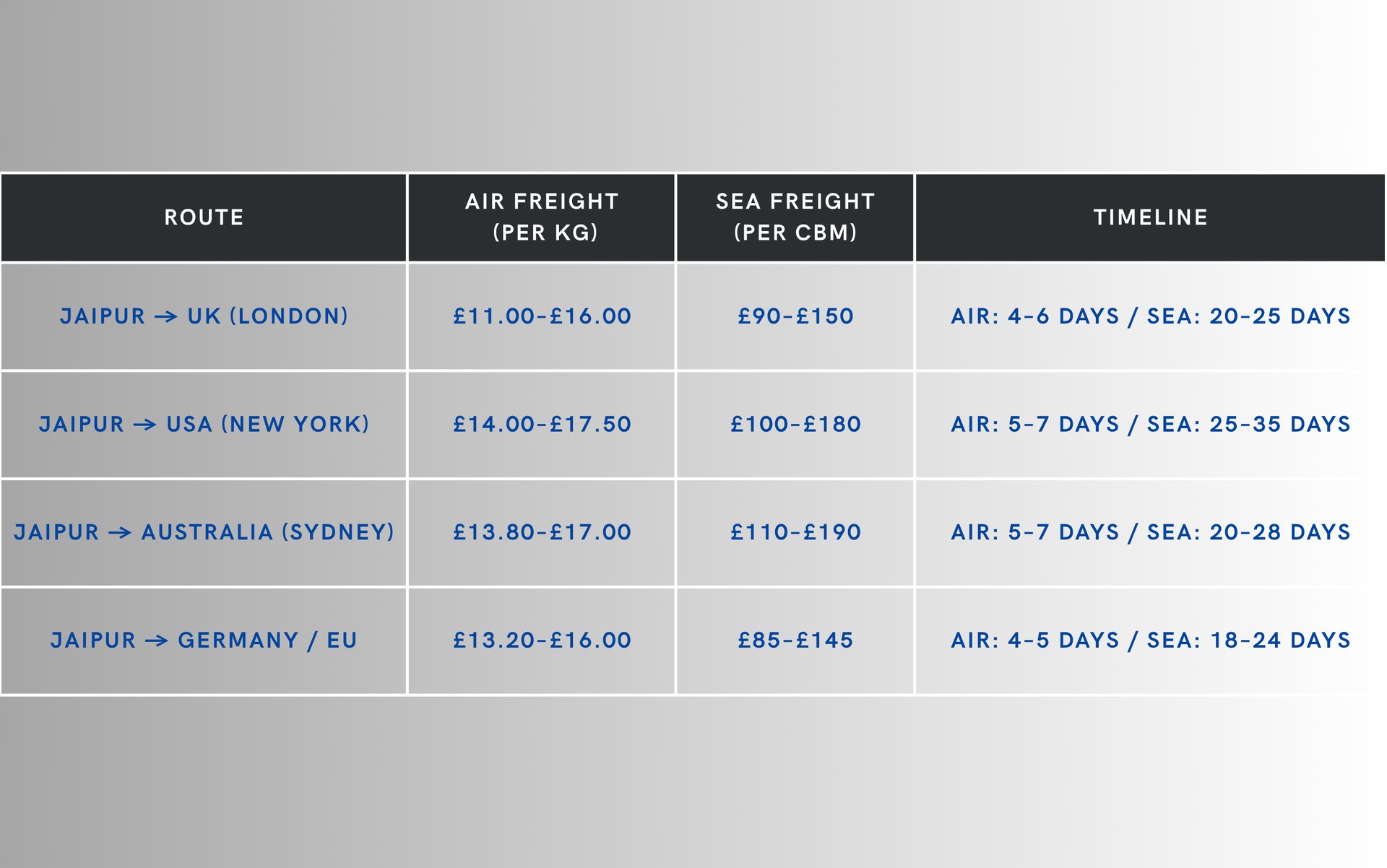
5. Shipping Cost (India to UK / USA / Australia)
6. Import Duties and Taxes
Import duty is often overlooked by first-time buyers and creates an unwelcome surprise at customs. Key rates for Indian textile imports (2025 indicative):
UK: 10–12% on most clothing. UK Global Tariff applies post-Brexit. Check HMRC for your specific HS code.
USA: Varies 0–32% depending on garment type and fibre content. India benefits from AGOA-equivalent status for many categories.
Australia: 0% on most clothing imports (Australia has eliminated most garment import duties).
EU: 9–12% on most clothing from India; India's pending EU FTA may reduce this significantly.
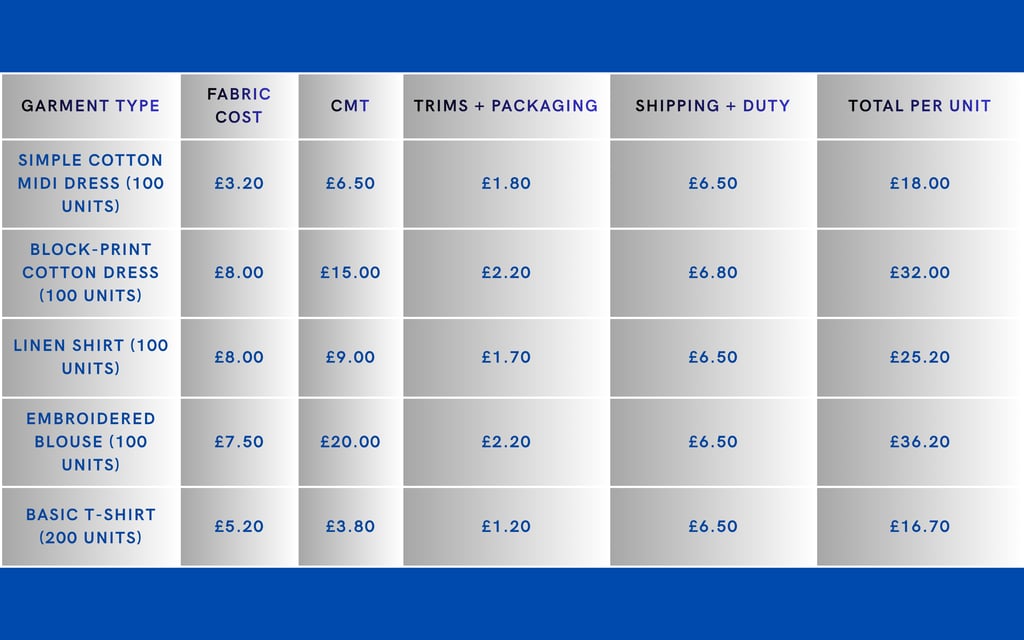
Real-World Total Cost Examples
(Per Garment, Delivered to UK)
How MOQ Affects Your Per-Unit Cost
Quantity has a meaningful impact on per-unit cost. Here's the general relationship for a standard cotton dress produced in Jaipur:
50 units: ~£22–£28 per unit delivered UK
100 units: ~£16–£22 per unit delivered UK
250 units: ~£12–£17 per unit delivered UK
500 units: ~£9–£14 per unit delivered UK
The jump from 50 to 100 units typically saves 20–30% per unit — which is why many brands who validate at 50 units move quickly to 100+ for their second run. For a deeper understanding of how MOQ dynamics work, read our complete guide to low MOQ clothing manufacturing in India.
Get a Real Quote — Not a Calculator
Tell us your garment types, quantities, fabric preferences, and target market. We'll give you an itemised production quote within 48 hours — real numbers you can build a business plan around.
Common Cost Questions (FAQ)
Q: Can I manufacture clothes in India for less than £10 per piece?
Yes — for basics like T-shirts and simple jersey garments at quantities of 200+ units. For structured garments, artisan techniques, or premium fabrics, realistically budget £14–£30 per unit delivered. Anything quoted below £8 for a complex garment at low MOQ should raise serious quality questions.
Q: Are there hidden costs I should know about?
Yes. The most commonly overlooked costs are: import duty (8–12% for UK buyers), customs clearance agent fees (£75–£200 per shipment), courier fees for samples, revision fees if samples require more than 2 rounds, and branded packaging costs if you want premium unboxing. Budget a 15–20% buffer on top of your manufacturer's quote.
Q: How does India compare to China on cost?
For basics and high-volume production, China can be marginally cheaper at very large quantities. At low MOQ (under 500 units), India is typically comparable or cheaper, with significantly better flexibility for custom design and artisan work. For UK and US brands, India also avoids the tariff exposure that Chinese sourcing now carries. We cover this in detail in our India vs China manufacturing comparison.
Q: How do I get the best price from an Indian manufacturer?
Come prepared: a precise tech pack reduces revision costs significantly. Order slightly higher quantities if your cash flow allows — the per-unit savings at 200 units vs 50 units are substantial. Use sea freight for bulk orders and air only for samples and urgent reorders. And build a long-term relationship — manufacturers reward repeat clients with better pricing and priority production slots.
Pricing Transparency Is a Signal of Manufacturer Quality
A manufacturer who gives you a clear, itemised cost sheet within 48 hours of receiving your brief is demonstrating the operational clarity you want in a production partner. Vague quotes ("around £15–£25 per piece") without line-item detail are a process warning — if they can't explain the cost clearly, they may not have tight enough control over their production to deliver consistent quality.
At Ashanari, every quote includes fabric cost, CMT, trims, packaging, and a shipping estimate. Our manufacturing services are designed around the needs of brands that want clarity, not mystery. No surprise invoices, no hidden fees.
Know Your Numbers. Build Your Brand.
Send us your garment brief and we'll build you a full production cost breakdown — fabric, labour, packaging, and shipping to your market — so you can plan with confidence.
Contact
Reach out for custom orders or questions
call | Whatsapp | email
ashanariindia@gmail.com
Nitin +91-9351612343
Deepti +91-9549123654
Address:
Ashanari Pvt. Ltd.
A-68, Vidhyut Nagar, Ajmer Road, Jaipur,
Rajasthan, India -302021
© 2025. All rights reserved with ashanari pvt ltd
info@ashanari.com