

Custom Clothing Manufacturer in India for New Brands
Custom Clothing Manufacturer in India for New Brands
12/14/20253 min read
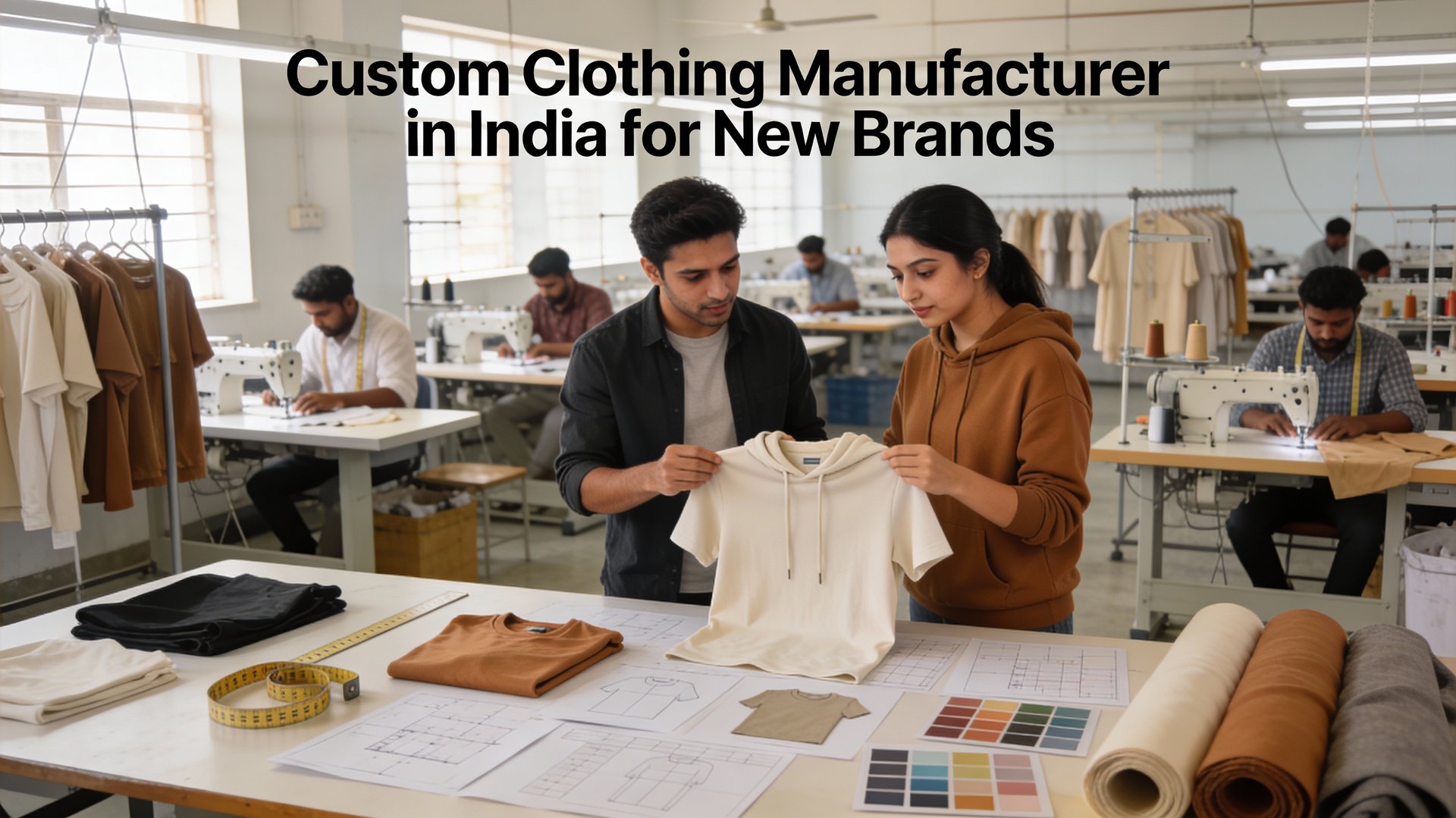
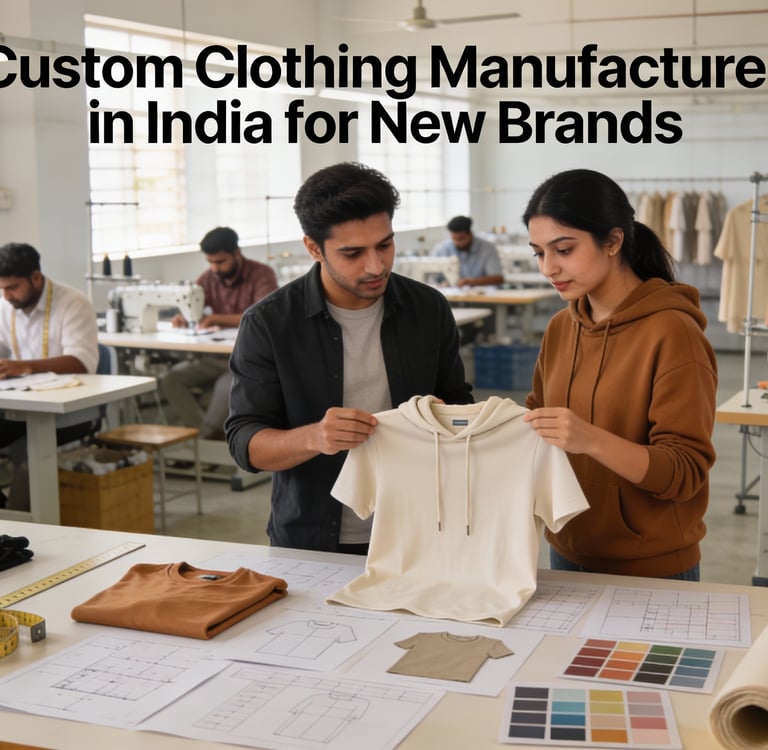
Custom manufacturing in India has become one of the most practical ways for new and growing fashion brands to launch collections without massive risk. This blog explains what “custom clothing manufacturing” really means, why so many founders choose India, and how to work with a factory in a professional way.
What “custom clothing manufacturer in India” actually means
A custom clothing manufacturer in India works with your own designs, fits, and branding rather than selling you ready-made stock.
Instead of buying generic garments, you send your ideas (sketches, reference images, or tech packs), and the factory helps convert them into patterns, samples, and final production.
For a new brand, this usually includes:
Custom fits and sizes suited to your target market
Choice of fabrics, GSM, and finishes
Custom colors, prints, and embroidery
Your own labels, tags, and packaging
Why new brands choose India for custom manufacturing
India is known for its textile history, huge fabric markets, and skilled garment workers.
Many cities and clusters specialize in different product categories such as knitwear, denim, ethnicwear, loungewear, and streetwear.
Key reasons many international brands prefer Indian factories:
Wide fabric choice in cotton, blends, and sustainable options
Competitive manufacturing costs compared to many Western countries
Experienced pattern masters, tailors, and merchandisers
Ability to handle both small batches and larger runs as the brand grows
For a new brand, this combination means lower entry cost and access to professional systems that would be expensive to build alone.
The custom clothing manufacturing process in simple steps
Most serious custom clothing manufacturers in India follow a similar framework.
Understanding these steps helps you communicate more clearly and avoid delays.
Common stages:
Initial enquiry
You share basic information: product types (e.g., hoodies, shirts), target sizes, quantity estimates, and target country.
The factory replies with general MOQ ranges and whether they can handle your products.
Design and tech pack
You provide tech packs or clear references with measurements, construction details, print positions, and any special trims.
If you do not have full tech packs, some factories offer support or connect you with a freelance designer.
Fabric and trim selection
The factory suggests appropriate fabrics based on your product and price points.
You confirm GSM, composition, and feel, often using digital confirmations plus physical swatches.
Sample development
A fit sample or proto sample is made first.
You review the sample, fit, and finishing, then send feedback for corrections.
Pre-production (PP) sample
After finalizing details, a PP sample is made in the bulk fabric.
This acts as the “master reference” for production.
Bulk production
The factory cuts, stitches, prints/embroider, and finishes the garments.
In-line and final quality checks are done before packing.
Packing and dispatch
Pieces are packed with your labels, tags, and polybags or boxes.
The shipment moves by courier, air cargo, or sea freight depending on order size and urgency.
What new brands should prepare before contacting a factory
You do not need a big team, but you do need clarity.
Before reaching out to a custom clothing manufacturer in India, prepare at least:
Clear idea of your product range (e.g., unisex hoodies and oversized t-shirts)
Rough quantity per style, per color, and per size
Basic target price range or budget
Timeline (launch month and any important dates)
Size charts or reference fits you like
The more clarity you have, the faster the factory can respond with realistic options.
How a factory like Ashanari can fit into this picture
A small-batch, custom clothing manufacturer in India can be a long-term partner, not just a one-time supplier.
For new and upcoming brands, a partner who understands low MOQs, streetwear fits, and international expectations makes a big difference.
A factory like Ashanari can help with:
Custom patterns and fits for your target market
Small-batch runs for new or test collections
Step-by-step communication from sampling to shipping
When you are ready, you can share your ideas, product list, and target launch dates, and start with a clear, structured custom manufacturing plan.
Contact
Reach out for custom orders or questions
call | Whatsapp | email
ashanariindia@gmail.com
Nitin +91-9351612343
Deepti +91-9549123654
Address:
Ashanari Pvt. Ltd.
A-68, Vidhyut Nagar, Ajmer Road, Jaipur,
Rajasthan, India -302021
© 2025. All rights reserved with ashanari pvt ltd
info@ashanari.com