

Hand Block Print vs Digital Print Clothing | What to Choose
Hand block printing or digital printing for your clothing brand? Compare cost, quality, MOQ, and brand story value with this honest breakdown from Ashanari.
CRAFT & PRODUCTION
Ashanari
4/5/20263 min read
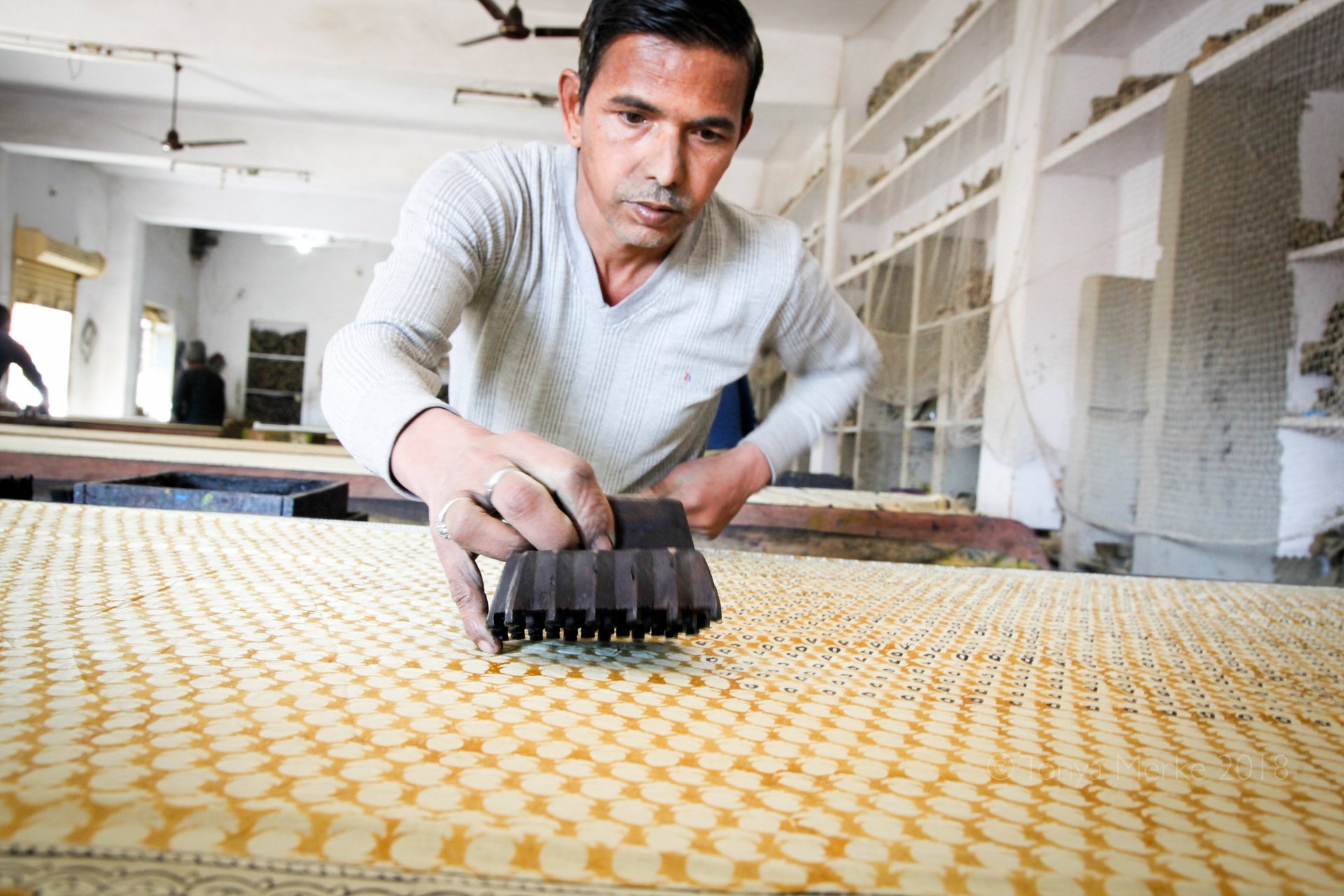
Hand Block Printing vs Digital Printing for Clothing: What Fashion Brands Should Actually Choose
The printing technique you choose for your clothing line does more than determine how a pattern looks — it shapes your production costs, your brand story, your environmental footprint, and frankly, who your customer is.
This guide breaks down hand block printing versus digital printing for fashion brands in plain terms: no jargon, no manufacturer bias, just an honest comparison to help you make the right call for your collection.
What Is Hand Block Printing?
Hand block printing is a centuries-old Indian textile technique in which carved wooden or metal blocks are dipped in natural or synthetic dyes and pressed by hand onto fabric to create repeating patterns. Jaipur, Rajasthan is the world's most famous centre for this craft — home to thousands of artisans (block printers, known locally as chhipas) who have passed this skill through generations.
Every print is produced by a human hand. The slight variations in ink density, alignment, and pressure are features, not flaws — they're the signature of authenticity that machine printing simply cannot replicate.
At Ashanari, our block printing is done entirely in-house by skilled artisans in our Jaipur facility. Explore our handcraft manufacturing services to see what's possible for your brand.
What Is Digital (DTF/DTG) Printing?
Digital printing applies ink directly to fabric (or a transfer film) via computer-driven inkjet technology. It's precise, photographic-quality, fast, and requires no physical blocks. DTG (Direct to Garment) prints individual pieces; DTF (Direct to Film) creates transfers applied to fabric with heat. Screen printing is a related but older analogue process.
The Honest Comparison: 7 Deciding Factors
1. Cost Per Unit
Block Print: Higher labour cost (it's manual), but fabric and ink costs are often lower. Per-unit cost is relatively consistent regardless of run size. At low MOQ (50–200 pieces), block printing is often more economical than you'd expect. Digital Print: Setup costs are low. Per-unit cost drops dramatically at scale. For very short runs (under 20 pieces), digital is cheaper. For 50–500 pieces, block and digital become comparable depending on design complexity.
2. Design Capability
Block Print: Best for geometric, floral, and repeating pattern designs with 1–4 colours. Creating a 10-colour photorealistic print with blocks is neither practical nor authentic to the craft. Digital Print: Unlimited colour depth, photographic reproduction, gradients, fine detail. If your design is complex and multicolour, digital is the technically superior choice.
3. Fabric Compatibility
Block Print: Works beautifully on natural fabrics — cotton, linen, silk, viscose. Doesn't adhere well to synthetics. Digital Print: DTG requires cotton-rich fabric. DTF works on a wider range including synthetics.
4. Brand Story Value
This is where hand block printing wins decisively — and for many fashion brands, it's the most commercially important factor. Block-printed clothing from Jaipur carries a narrative: "Made by hand by artisans whose families have practiced this craft for 400 years." Digital printing carries no comparable story. For sustainable, bohemian, artisan-positioned, or premium brands targeting discerning customers in the UK, Australia, or Europe, the brand story value of block printing often justifies a 15–30% retail premium.
A block-printed dress from Jaipur isn't just a dress — it's an object with provenance. That provenance is a sales argument your marketing team couldn't invent even with a million-dollar budget.
5. Sustainability
Block Print: Traditional block printing with natural/AZO-free dyes has a significantly lower environmental footprint than most synthetic processes. Water usage is lower; dyes can be vegetable-sourced; no plastic films or synthetic transfers. Digital Print: DTF produces a plastic film that is non-biodegradable. DTG inks vary in environmental impact. Neither is inherently "green" without specific material choices.
6. Lead Time
Block Print: Slightly longer due to the manual nature. Allow 5–10 extra production days for complex multi-block designs. Digital Print: Faster for simple designs once set up. Good for rapid reorders or short-run promotional pieces.
7. Uniqueness & Exclusivity
Block Print: Every piece is genuinely unique. Two garments from the same print run will have subtle differences. This is a powerful selling point for premium positioning. Digital Print: Perfectly consistent. This is a quality advantage for basics and volume, but a disadvantage if you're selling exclusivity.
Which Should You Choose? (Decision Framework)
Choose hand block printing if your brand is positioned in the artisan, sustainable, boho, ethical, or premium-craft space — and especially if your customers are in markets that value provenance and story (UK, Australia, Germany, Scandinavia).
Choose digital printing if you need photorealistic or complex multi-colour designs, fast turnaround, or synthetic fabric printing — and if your brand is more focused on fashion-forward design than artisan heritage.
And consider combining both — using block-printed fabrics as your hero statement pieces while using digital-printed accessories or basics to round out your collection.
Sourcing Block Printed Clothing in Jaipur
If you've decided that hand block printing is right for your brand, Jaipur is where the world's finest block print manufacturers operate. Our detailed guide on block print clothing manufacturing in India walks through the full process from design brief to finished garment.
For brands sourcing fabric wholesale, see our guide on sourcing hand block print fabric wholesale from Jaipur.
Want to See Our Block Print Samples?
We'll send you a physical sample pack of our current block print fabrics and finished garments — shipped internationally. Just tell us your address and what you're building.
Contact
Reach out for custom orders or questions
call | Whatsapp | email
ashanariindia@gmail.com
Nitin +91-9351612343
Deepti +91-9549123654
Address:
Ashanari Pvt. Ltd.
A-68, Vidhyut Nagar, Ajmer Road, Jaipur,
Rajasthan, India -302021
© 2025. All rights reserved with ashanari pvt ltd
info@ashanari.com