
How to Find a Clothing Manufacturer for Startups 2025
Starting a clothing brand? This guide covers exactly how to find, vet, and work with a clothing manufacturer in 2025 (clothing manufacturer for startups) — from first inquiry to bulk production.
BRAND BUILDING GUIDES
Ashanari Brand Strategy Team
4/6/20264 min read
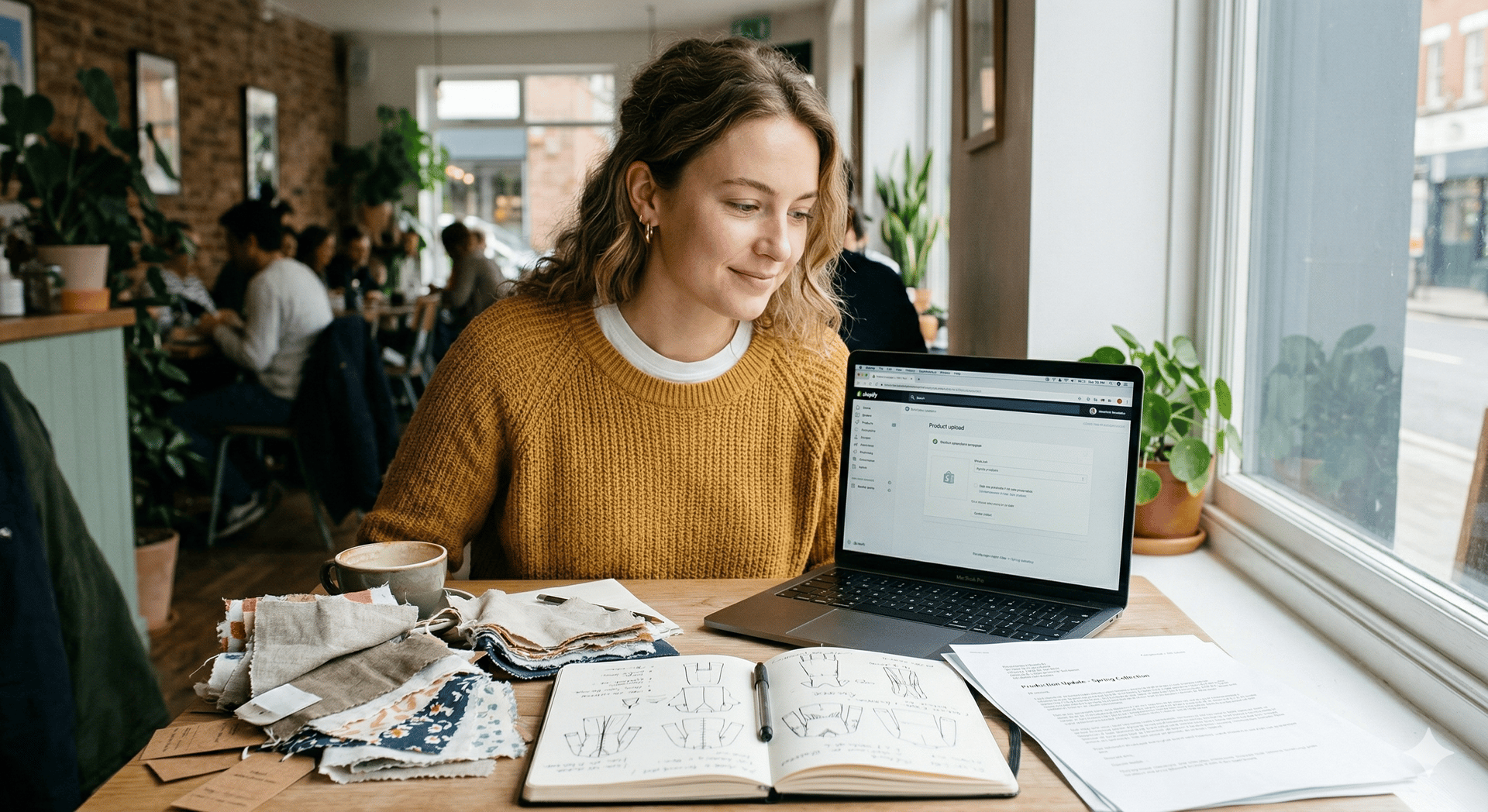

How to Find a Clothing Manufacturer for Your New Brand: The 2025 Global Guide
The single most important decision you'll make when launching a clothing brand isn't your logo, your pricing strategy, or your Instagram aesthetic. It's who makes your clothes.
Get this right, and you have a business. Get it wrong, and you're sitting on a warehouse of off-spec garments that don't match your samples, with a manufacturer who's stopped returning emails.
This guide is for first-time brand founders — UK boutique owners, USA DTC entrepreneurs, Australian fashion startups, and European brand builders — who need a clear, honest roadmap to finding a clothing manufacturer they can actually trust.
Step 1: Know What You Need Before You Start Looking
Before you contact a single manufacturer, get clear on your requirements. Factories receive dozens of vague inquiries daily. The founders who get taken seriously are the ones who come prepared.
Define these before your first outreach:
Product category: Women's wear? Activewear? Boho/artisan? Basics? Technical garments?
Approximate quantity: How many units per style, per season?
Target retail price: This tells the manufacturer what quality tier you're working in
Design stage: Do you have tech packs, sketches, or reference samples?
Timeline: When do you need the goods?
Market: Where are your customers? (UK? Australia? USA?) This affects import duty, labelling, and shipping logistics
Don't have a tech pack? Read our guide on what a clothing tech pack is and how to create one — it's the essential document every manufacturer needs before production starts.
Step 2: Choose Your Manufacturing Region
The "best" manufacturing country depends on your product, your values, and your brand story. Here's a clear-eyed summary:
India
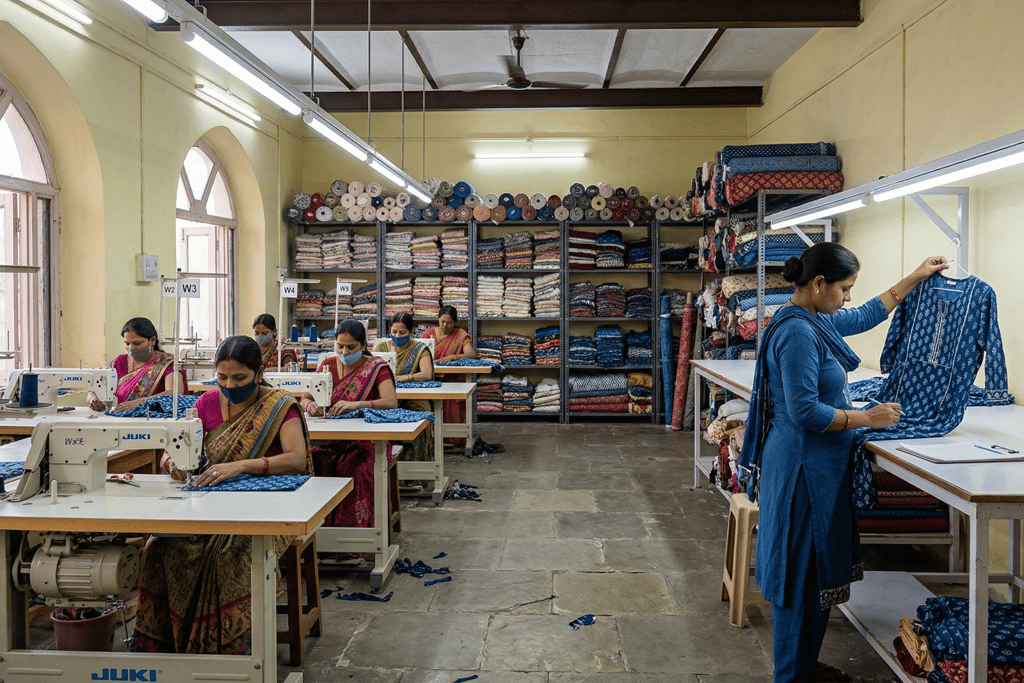
Best for: Artisan techniques (block print, embroidery, handloom), sustainable and organic collections, private label with low MOQ, brands with a story to tell. Jaipur is particularly strong for handcraft and custom design work. See the full breakdown in our guide on private label clothing manufacturing in India.
China
Best for: High-volume basics, technical garments, very complex construction. Less suitable for low MOQ, custom artisan work, or brands navigating US-China trade tensions.
Portugal / EU
Best for: EU brands with "Made in Europe" positioning, luxury-adjacent products. High quality but high cost — typically 3–5x India pricing.
Bangladesh / Sri Lanka
Best for: Volume jersey and basics. Very limited custom design capability. MOQs typically 500+ units.
Turkey
Best for: European brands wanting faster logistics and Made in Turkey positioning. Better custom capability than Bangladesh but limited artisan craft.
For most startup brands worldwide — especially those building differentiated, story-driven collections — India offers the best combination of quality, price, flexibility, and craft capability.
Step 3: Where to Actually Find Manufacturers
This is where most first-time founders waste weeks. Here's what works and what doesn't:
What Works
Direct outreach to verified manufacturers: Google is your friend. Search specifically for "[product type] manufacturer [city/country]" — e.g., "block print clothing manufacturer Jaipur" or "low MOQ private label clothing India".
Trade shows: India International Garment Fair (IIGF), Texworld, and Première Vision are where serious manufacturers exhibit. In-person relationships convert faster.
Industry forums and communities: Fashion brand founder communities on Reddit (r/femalefashionadvice, r/streetwear manufacturing threads), Facebook groups, and LinkedIn are genuine sources of vetted referrals.
Referrals from other brands: Ask brands you admire (not direct competitors) who they use. This is the single most reliable sourcing method.
What Doesn't Work
Alibaba for private label: Alibaba is a trading platform optimised for commodity products and high MOQ orders. Quality is wildly inconsistent and relationship-building is difficult.
Cold emailing factories without context: Mass-emailing factories without personalisation gets ignored. Do your research and send targeted, specific inquiries.
Step 4: Vet Your Shortlist Seriously
Once you have 3–5 manufacturers on your shortlist, dig in before committing. Here's a practical vetting framework:
Request a Capability Profile
Ask for: product categories they manufacture, current export markets, certifications (GOTS, OEKO-TEX, SA8000), minimum order quantities, and production capacity per month.
Ask for References
Request contact details of 2–3 current clients from your target market. Any manufacturer worth working with will provide these without hesitation.
Order a Sample
This is non-negotiable. Send your design brief and request a pre-production sample. Evaluate not just the quality of the sample but the speed of response, the clarity of communication, and whether they've understood your brief.
Have a Video Call
A quick Zoom or Teams call — ideally with a factory walkthrough — tells you more than any email exchange. You want to see who you're working with.
Step 5: Negotiate and Structure Your First Order
Once you've found a manufacturer you trust, structure your first engagement carefully:
Start with a sampling order before any bulk commitment
Get a signed production agreement covering timeline, quality standards, penalty clauses, and payment terms
Pay a deposit (30–50%) on commencement, balance on completion before shipment
Request mid-production photo updates
Arrange third-party quality inspection if ordering 200+ units (services like QIMA operate in India)
For a deeper dive into the operational side of working with manufacturers, see our fashion startup manufacturing checklist — a practical pre-production toolkit.
The Mistakes That Cost Startup Brands Thousands
Ordering bulk before validating the sample
Choosing the cheapest quote without checking quality history
Failing to specify packaging, labels, and hang tags in the original brief
Skipping a written agreement and relying on WhatsApp promises
Not accounting for lead times when planning your launch calendar
Ashanari: A Manufacturer That Actually Talks to You
We offer free 30-minute discovery calls for startup brands considering their first production run. No pitch, no pressure — just honest answers about what's possible for your brand.
Why Ashanari Exists for Brands Exactly Like Yours
Ashanari was built specifically for startup brands and growing fashion businesses that need a manufacturing partner who communicates clearly, delivers consistently, and scales with them.
We offer low MOQ production from 50 units, complete manufacturing services from sampling through bulk production, in-house artisan techniques including block printing and embroidery, and global shipping to UK, USA, Australia, and Europe.
If you're starting a clothing brand and want a manufacturer who gets it — the challenges, the anxieties, the ambition — we'd love to hear about your project.
Your Brand. Your Label. Made in Jaipur.
Share your concept with us — sketch, mood board, reference images, or just a description. We'll tell you what's possible.
Contact
Reach out for custom orders or questions
call | Whatsapp | email
ashanariindia@gmail.com
Nitin +91-9351612343
Deepti +91-9549123654
Address:
Ashanari Pvt. Ltd.
A-68, Vidhyut Nagar, Ajmer Road, Jaipur,
Rajasthan, India -302021
© 2025. All rights reserved with ashanari pvt ltd
info@ashanari.com