
How to Start a Private Label Clothing Brand | Low MOQ Guide 2025
Step-by-step guide to starting a private label clothing brand with low MOQ. Learn how to source from India, order samples, and launch profitably.
BRAND BUILDING GUIDES
Ashanari Brand Strategy Team
4/12/20266 min read
How to Start a Private Label Clothing Brand With Low MOQ in 2025 (Step-by-Step)
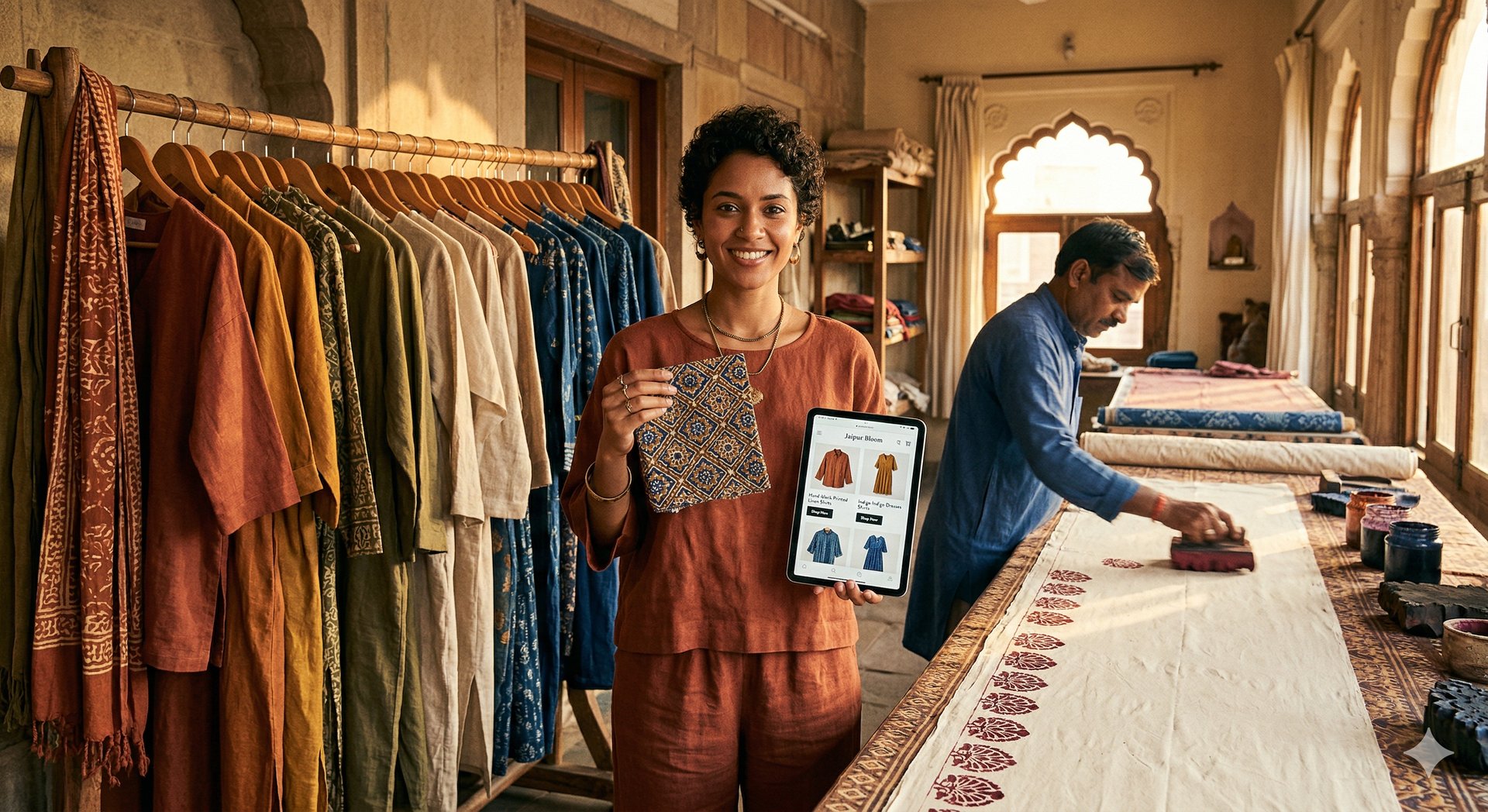
Starting a private label clothing brand used to require a significant capital outlay — thousands of units, expensive tooling, and a factory relationship that only the industry-connected could access. That world no longer exists. In 2025, you can launch a private label clothing brand with as few as 50 pieces, source from world-class artisan manufacturers in India, and sell to customers in London, New York, Melbourne, or Berlin — all before you've quit your day job.
This guide gives you the exact steps to do it. Not theory — an operational playbook based on how real startup brands are being built right now.
🇬🇧 UK 🇺🇸 USA 🇦🇺 Australia 🇪🇺 Europe 🌏 Global
What Is a Private Label Clothing Brand?
A private label clothing brand is one where you sell garments made by a third-party manufacturer under your own brand name. You own the label, the design direction, the pricing, and the customer relationship. The manufacturer handles production.
This is the business model behind thousands of successful fashion brands — from £80 linen dresses sold through Instagram to six-figure DTC labels shipping globally. The core advantage: you build a brand, not a factory. Your energy goes into design, marketing, and customer experience.
For a deeper understanding of what this model entails, our complete guide to private label clothing manufacturing in India covers the full landscape.
Step 1: Define Your Brand Before You Design a Single Garment
The brands that struggle most in their first year are those that start with "I want to make clothing" rather than "I want to serve a specific customer with a specific need." Before you contact a single manufacturer, answer these five questions:
Who is your customer?
Get specific. Not "women aged 25–45" — try "UK women in their 30s who shop sustainable fashion, follow slow-living creators on Instagram, and pay a premium for provenance."
What is your positioning?
Artisan/handicraft? Minimalist essentials? Premium sustainable? Your positioning determines your manufacturer — they're not interchangeable.
What are your hero SKUs?
For a first launch, 2–4 styles are ideal. More than six can stretch your budget, overwhelm your customer, and complicate your production.
What's your price point?
Work backwards from the retail price to understand what your production cost needs to be. A garment retailing at £85 in the UK typically needs to be manufactured at £18–28 (including fabric, labour, and shipping) to maintain a viable margin.
Where will you sell?
Your own website? Wholesale to boutiques? A marketplace? This affects how many units you need to launch with.
The clearer your brand concept, the better your manufacturer can serve you. "I make sustainable handcrafted linen pieces for the conscious consumer" is a brief a manufacturer can work with. "I want nice clothes" is not.
Step 2: Understand Your Numbers Before You Spend Anything
Private label clothing is a real business. Treat it like one from day one. Here's a realistic startup financial framework:
50
Min units per style (Ashanari)
£800–£2K
Typical sampling investment
30–50%
Standard production deposit
45–60
Days: brief to delivery
A realistic budget for a first private label launch (2 styles, 50 units each, from India to UK):
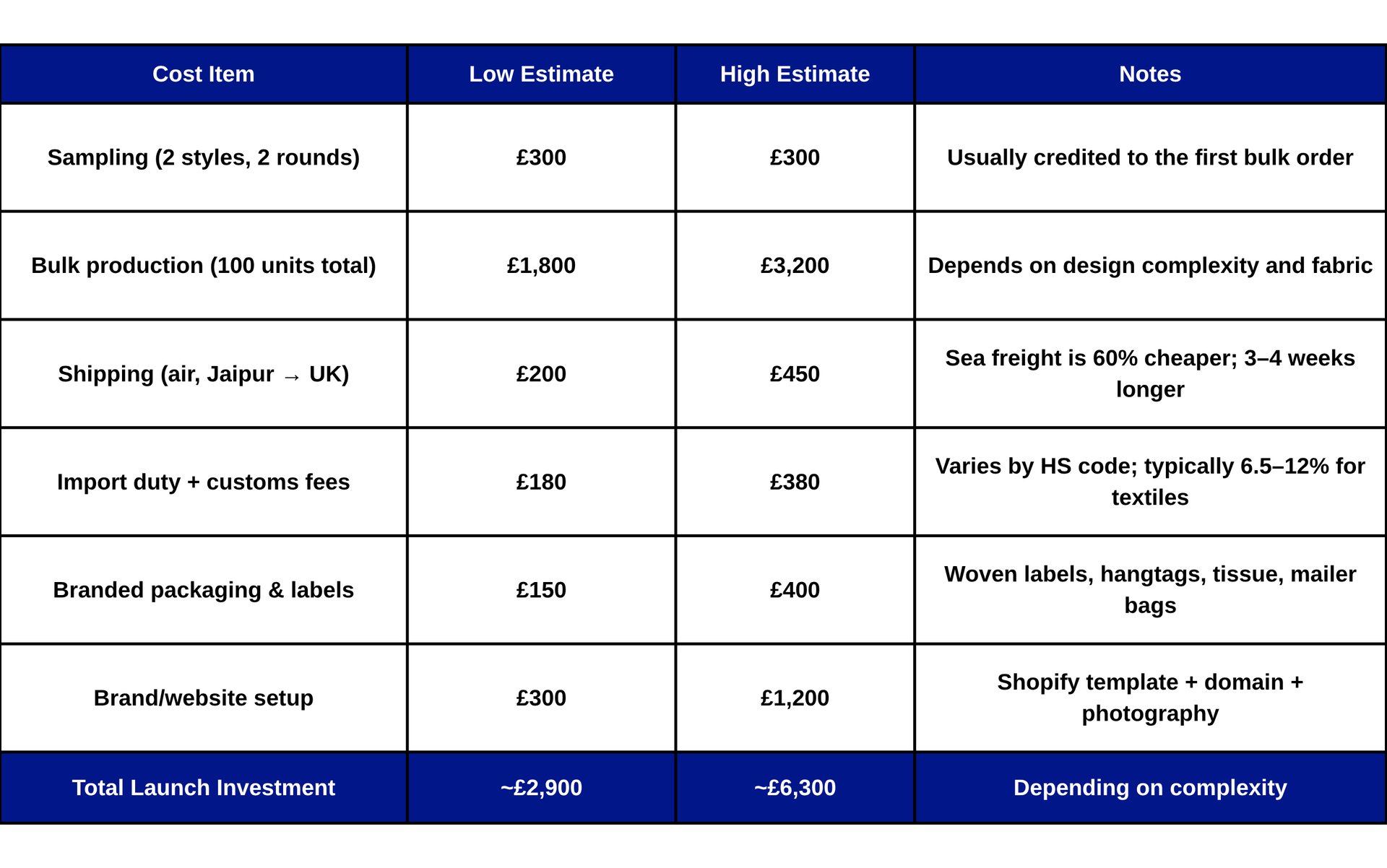
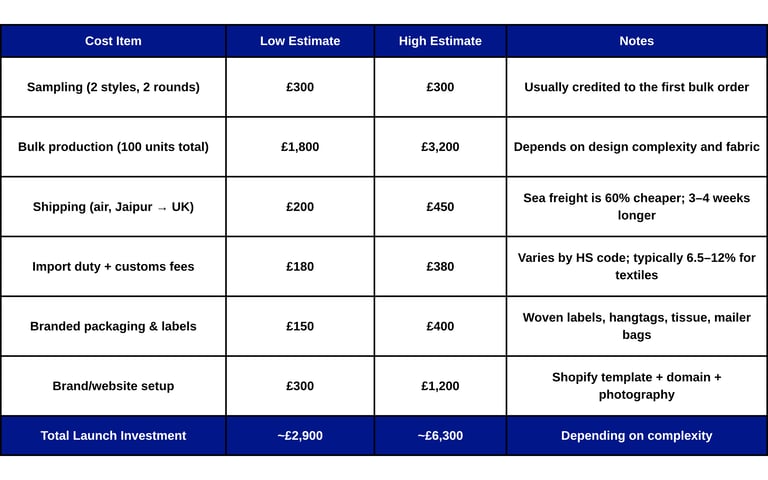
This is genuinely achievable for a first-time brand founder in the UK, USA, or Australia without external funding. Many Ashanari clients have launched their first private label collections for under £4,000 total.
Step 3: Create Your Design Brief or Tech Pack
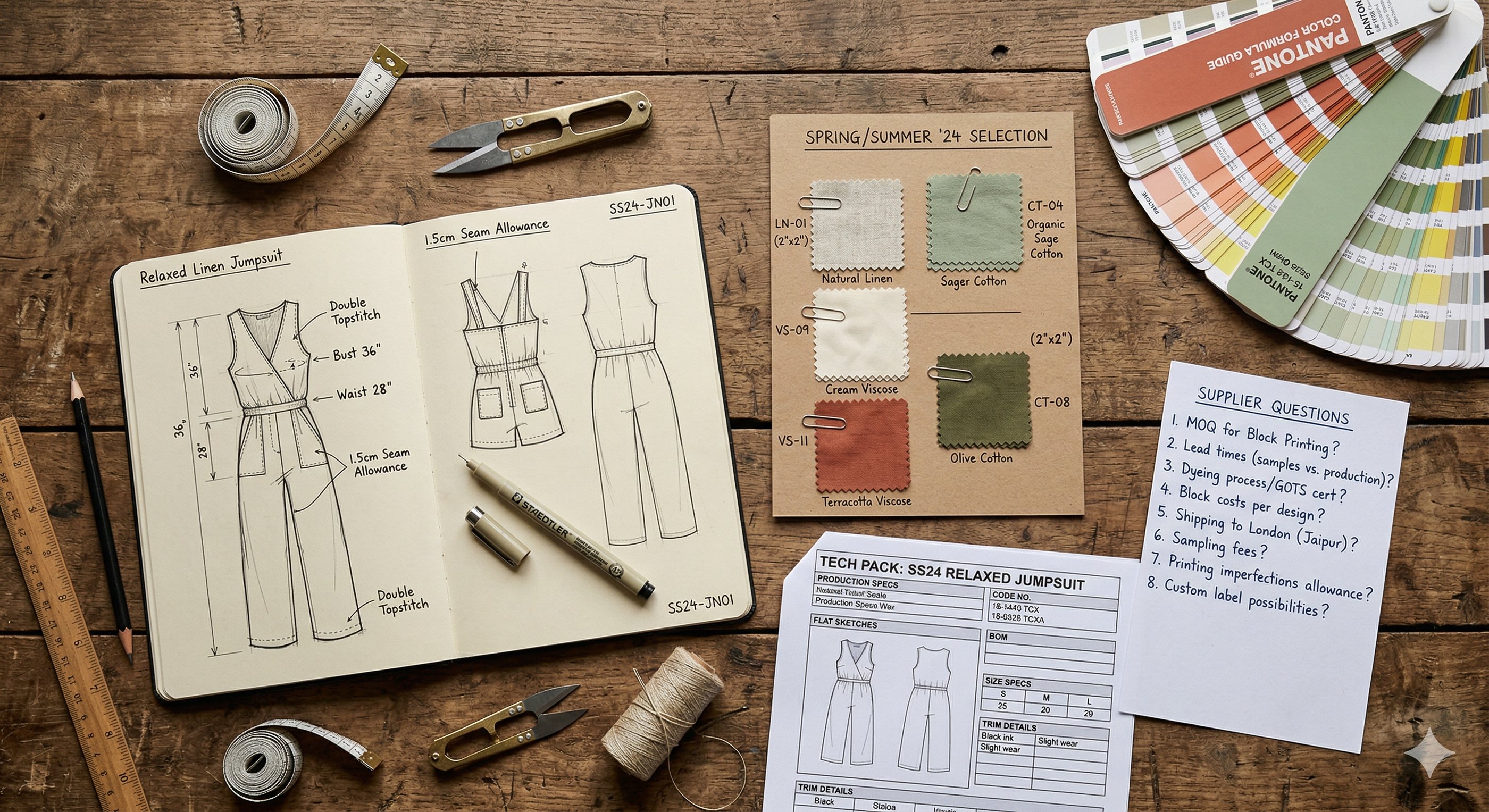
Before you contact a manufacturer, prepare your design documentation. The more precise you are, the faster and cheaper your sampling process will be.
At minimum, you need:
Sketches or reference images for each style
Fabric preferences (linen, cotton, viscose, organic cotton, etc.)
Size range and approximate measurements
Colour references (Pantone codes or physical swatches)
Construction details: stitching type, pocket placement, closure style
Label and branding requirements
If you can create a full tech pack (a technical document containing all construction specifications), even better — it dramatically reduces revision rounds. Our guide on what a tech pack is and how to build one walks through the complete document structure. If you don't have the skills or tools to create one, manufacturers like Ashanari offer tech pack development as part of our production support services.
Step 4: Find and Vet the Right Manufacturer
This is where most founders make expensive mistakes. The cheapest quote is almost never the best choice. Here's what to look for in a low MOQ private label manufacturer:
Genuine in-house production — not a broker acting as a manufacturer
Low MOQ that reflects their actual production model, not just a number they've put on a website
Sample quality you can verify before bulk commitment — always ask for samples
Export experience to your specific market (UK, USA, Australia — each has different customs requirements)
Clear communication — response within 24–48 hours is a minimum bar
Transparent pricing — itemised, not just a total quote
A manufacturer who can't answer "where does your fabric come from?" — proceed with caution
Any manufacturer who pressures you to skip sampling and go straight to bulk
Manufacturers who give wildly below-market quotes — the garments will match the price
For a deeper vetting process, read our guide on how to find the right clothing manufacturer for your brand, which covers the full due diligence framework.
Step 5: Order Samples — This Is Non-Negotiable
Never, under any circumstances, place a bulk order without first receiving and approving a physical sample. This is the single rule that separates founders who build successful brands from those who end up with a warehouse of unusable garments.
1. Request a Pre-Production Sample (PP Sample)
Submit your brief and request one sample of each style. Budget £50–£150 per sample, depending on complexity. This fee is usually credited against your bulk order.
2. Evaluate Thoroughly
Check: fit on a real body, fabric hand-feel and weight, stitching quality (particularly stress points — seams, armholes, waistbands), colour accuracy, print registration (if applicable), and label placement.
3. Request Revisions
Most manufacturers include 1–2 revision rounds. Be specific in your feedback — "the waist runs 2cm too wide" is actionable; "it doesn't feel right" is not.
4. Approve and Proceed to Bulk
Only once you're genuinely happy with the sample should you approve bulk production. Keep the approved sample as your quality reference for the production run.
Step 6: Place Your First Bulk Order — Strategically
Your first bulk order should be a test, not a bet. Here's how to structure it for minimum risk and maximum learning:
Start with 50–100 units per style. Enough to test the market and fill initial demand, not so much that you're underwater if sales are slow.
Limit to 2–3 colourways per style. More options mean more inventory risk, more confusion for the customer, and more complexity in production.
Pay 30–40% deposit upfront, balance before shipment. Standard industry terms. Any manufacturer asking for 100% upfront should be questioned.
Request production photos at each stage: cutting, sewing, finishing, packing. A reputable manufacturer sends these without being asked.
Build in buffer time. If you need goods in 45 days, tell the manufacturer you need them in 35. Production schedules slip. This is not a character failing — it is the nature of handcraft manufacturing.
Step 7: Plan Your Brand Launch
While your goods are in production, build your launch infrastructure:
Set up your Shopify or WooCommerce store with your branding and product pages ready to go live
Commission a professional product photo shoot — for a UK audience, natural-light lifestyle photography outperforms studio shots significantly
Build your social media presence with behind-the-scenes content from the production process (block printing videos from Jaipur perform extraordinarily well on Instagram Reels and TikTok)
Set up your email list before launch day — even 200 interested subscribers is a valuable launch asset
Identify 5–10 aligned micro-influencers or content creators for gifting/collaboration
Why Ashanari Is Built for This Exact Journey
Ashanari is a Jaipur-based B2B clothing manufacturer that exists specifically for the startup brand founder. Our minimum order is 50 pieces per style. We produce garments using both standard construction and artisan techniques — block printing, hand embroidery, natural dyeing — that give your brand visual distinction in a saturated market.
We've walked this journey with brand founders from the UK, Australia, Germany, the USA, and beyond — from their first 50-piece sample order to their first 2,000-piece production run. We know what you need, what questions you have, and where the process feels confusing. We're here to make it clear.
Ready to Start Your Private Label Brand?
Tell us about your concept — your customer, your aesthetic, your target retail price, and how many pieces you're thinking of. We'll come back to you within 24 hours with a honest assessment of what's possible and what it will cost.
Contact
Reach out for custom orders or questions
call | Whatsapp | email
ashanariindia@gmail.com
Nitin +91-9351612343
Deepti +91-9549123654
Address:
Ashanari Pvt. Ltd.
A-68, Vidhyut Nagar, Ajmer Road, Jaipur,
Rajasthan, India -302021
© 2025. All rights reserved with ashanari pvt ltd
info@ashanari.com