
how to vet clothing manufacturer india | Red Flags Guide
How to vet clothing manufacturer India before placing your first order. A complete due diligence framework covering red flags, green flags, and verification steps.
BRAND BUILDING GUIDES
4/29/20265 min read
How to Vet a Clothing Manufacturer in India: Red Flags, Green Flags & the Due Diligence Framework That Works
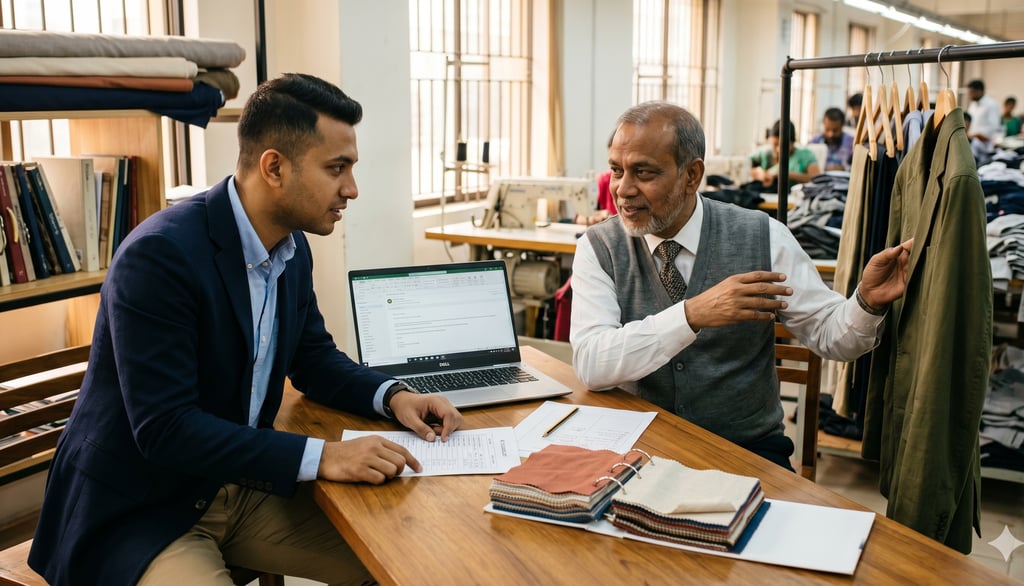
Choosing the wrong clothing manufacturer costs money. It costs time. It can cost you a season. And it happens most often not because the manufacturer was dishonest — though sometimes they are — but because the brand founder didn't know what questions to ask, what to look for, or how to verify what they were told.
This guide gives you a complete due diligence framework for vetting clothing manufacturers in India. Use it before you sign anything, pay any deposit, or make any commitment. It will protect your brand from the most common sourcing disasters — and help you identify the rare manufacturers worth building long-term relationships with.
Why Vetting Matters More With Indian Manufacturers Than You Might Think
India's garment manufacturing ecosystem spans everything from world-class export-oriented factories with GOTS certification and Fortune 500 clients, to one-room operations with a single sewing machine and a Whatsapp number. The range in quality, reliability, and honesty is as wide as you'll find anywhere on earth.
The good news: genuinely excellent Indian manufacturers are accessible to startup brands if you know how to find and verify them. The bad news: so are bad ones — and they often look identical in an email thread or WhatsApp conversation.
Stage 1: Before You Even Email Them
Verify Their Physical Existence
Before reaching out, verify that the manufacturer is a real business entity with a physical production facility:
✓Google Maps verify the address. Does a factory appear in street view, or is it a residential address?
✓Check their GST registration number (all legitimate Indian businesses have one) — verify it at the GST portal (gst.gov.in).
✓Check if their website shows actual production photos (not stock images) — look for metadata on images that locates them geographically.
⚠No physical address anywhere on their website or in their email signature — proceed with significant caution.
Understand What They Actually Make
Not every manufacturer can make every type of garment. A specialist block print manufacturer is not the right partner for technical activewear. A jersey T-shirt factory is not equipped for hand embroidery. Before any conversation, confirm that your product type is genuinely within their production capability — not just something they'll attempt for your money.
Stage 2: The Initial Inquiry — Green Flags & Red Flags
🟢 Green Flag. They respond to your inquiry within 24–48 hours with specific, relevant questions about your product. Not a generic "please send your requirements" — actual questions that show they've read your brief.
🔴 Red Flag: They respond with a rate card before asking you anything about your product. A manufacturer who quotes before understanding your requirements doesn't have a clear production process.
🟢 Green Flag. They mention their actual MOQ — and it's consistent with their website. Some manufacturers advertise low MOQs to attract inquiries, then quietly reveal higher minimums once you're engaged.
🔴 Red Flag Pricing is provided as a single total figure with no itemisation. "£18 per piece" without a breakdown of fabric, CMT, and trims hides information you need to evaluate value.
🟢 Green Flag. They proactively offer to show you previous work samples and suggest a video call. This indicates confidence in their quality and a professional approach to new client onboarding.
🔴 Red Flag. They ask for 100% payment upfront for a first sample from a brand they've never worked with before. Standard practice is 50–100% sample fee (credited to bulk) — but 100% advance payment before any relationship is established should give you pause.
Stage 3: The Sample Order — The Most Important Vetting Stage
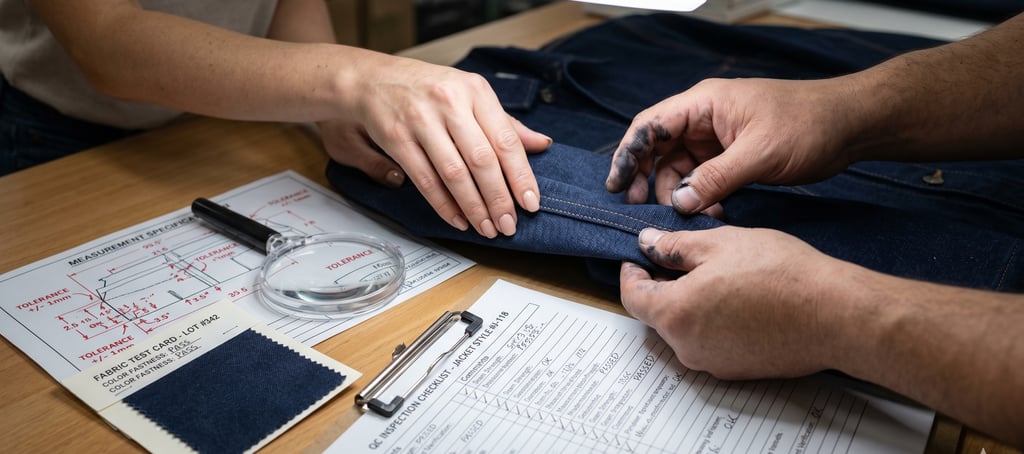
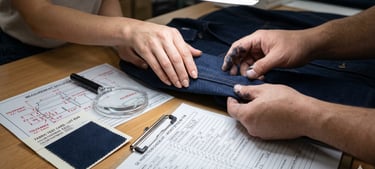
The sample order is where genuine manufacturers reveal themselves. This is a high-stakes process — not because samples cost a lot of money, but because how a manufacturer handles your first sample tells you almost everything about how they'll handle your bulk production.
💡Pro Tip: Always send a detailed brief before requesting a sample — not a vague description. A manufacturer who produces a good sample from a vague brief got lucky. A manufacturer who asks clarifying questions before starting is using a professional process.
When evaluating the sample, check:
✓Fabric accuracy: Does it match the specified GSM, composition, and hand-feel? Request the fabric test report if it matters to your brand.
✓Measurement accuracy: Measure every critical dimension against your spec sheet. Tolerances of ±1cm at seam points are acceptable; larger deviations are not.
✓Construction quality: Check every seam under good light. Stitches per inch (SPI) should match your specification — typically 10–14 SPI for woven garments. Look at stress points: underarm seams, waistbands, pocket openings.
✓Print quality (if applicable): Colour accuracy vs. your approved Pantone. Registration consistency across repeats. Wash a sample piece and check for colour bleed or fade.
✓Communication during sampling: Did they send unprompted progress updates? Did they respond to questions within 24 hours? Their communication during sampling is a preview of their communication during bulk.
⚠Sample timeline: Did it arrive within the promised window? Delays during sampling (when they're trying to impress you) often worsen during bulk production.
Stage 4: Reference Checks — Non-Negotiable
Any manufacturer worth working with will provide references from current clients. Request at least two references from brands in markets similar to yours — specifically, brands that have placed multiple orders (not just one). Then actually contact them:
What to ask a manufacturer for a reference
"How does the quality of what you receive compare to your approved sample?"
"Have they ever missed a delivery deadline — and how did they handle it?"
"How responsive are they when there's a problem mid-production?"
"Have you ever had a quality issue post-delivery — how was it resolved?"
"Would you recommend them without reservation?"
Stage 5: Legal & Financial Due Diligence
Before placing a bulk order, even a small one, establish these basics:
✓Get a signed Purchase Order or Production Agreement covering: exact specifications, quantity, price, timeline, payment terms, quality standards, and what happens if standards aren't met.
✓Confirm payment via bank transfer to a business account in the manufacturer's name — not a personal account. Personal account payments to an unknown individual are a fraud risk.
✓If ordering above £5,000–£10,000, consider trade credit insurance (Euler Hermes, Atradius) to protect against non-delivery.
⚠Never make payments via informal channels like cryptocurrency, gift cards, or informal money transfer services — these are irreversible and unprotected.
The Ongoing Relationship: Vetting Doesn't Stop After Order 1
A manufacturer who performs excellently on your first 50-unit order may have capacity or quality challenges when you scale to 500 units. Re-verify annually:
Request updated certification documents
Conduct or commission a periodic facility audit if your order volumes warrant it
Monitor for changes in ownership, management, or production team — these often precede quality shifts
The One-Sentence Vetting Rule
The best manufacturers are the ones who welcome scrutiny — because they have nothing to hide. If a manufacturer becomes evasive, defensive, or pressures you to skip any part of this process, the pressure itself is the answer.
Apply This Framework to Ashanari
We encourage you to vet us using every stage of this framework. We'll provide our GST registration, GOTS-certified fabric documentation, dye test reports, production facility video, existing client references, and an itemised quote — without being asked twice. If that sounds like the transparency you're looking for, let's talk.
Before you begin vetting manufacturers, ensure you have your production documentation ready. Read our guide on what a tech pack is and how to create one, and review our 10 questions to ask a clothing manufacturer — a companion piece to this vetting framework.
Contact
Reach out for custom orders or questions
call | Whatsapp | email
ashanariindia@gmail.com
Nitin +91-9351612343
Deepti +91-9549123654
Address:
Ashanari Pvt. Ltd.
A-68, Vidhyut Nagar, Ajmer Road, Jaipur,
Rajasthan, India -302021
© 2025. All rights reserved with ashanari pvt ltd
info@ashanari.com