
Low MOQ Clothing Manufacturer India | Small Batch Orders
Find a trusted low MOQ clothing manufacturer India. Ashanari produces from 50 units with full sampling, custom designs & global shipping. Guide to grow a brand.
MANUFACTURING GUIDES
Ashanari Manufacturing Team
4/5/20265 min read
Low MOQ Clothing Manufacturing in India: The Startup Founder's Complete Guide
50
Ashanari minimum units
per style
72%
Startups fail due to overproduction
3x
Faster to market
vs
high-MOQ factories
30–45
Days
production timeline
If you've spent more than ten minutes researching clothing manufacturers, you've hit the same wall: "Minimum order: 500 pieces per colour." Or worse, 1,000. For a brand just starting out — or a brand testing a new category — those numbers can feel like a door slammed in your face.
The good news: low MOQ clothing manufacturing in India has become genuinely accessible, and India is where the world's smartest startup founders are building their brands. This guide tells you exactly what to expect, what questions to ask, and how to avoid the expensive mistakes most first-time buyers make.
What Does MOQ Actually Mean — And Why Does It Matter?
MOQ stands for Minimum Order Quantity. It's the smallest number of units a manufacturer will produce in a single order. MOQs exist because factories have fixed costs: setting up a machine, cutting fabric, mixing a dye batch, and training a sewing team for a new design all take time and money regardless of whether you're making 50 or 5,000 pieces.
The problem for startup brands is obvious: committing to 500 pieces of a product you haven't yet sold is a significant financial and inventory risk. A low MOQ manufacturer understands this and has built their operations to accommodate smaller runs profitably — typically through flexible production lines, shared fabric batches, and leaner operational structures.
We've covered this in detail in our introductory post on what MOQ means in clothing manufacturing — worth reading if you're entirely new to the concept.
Why India for Low MOQ? Not All Countries Are Equal
China remains the world's largest garment producer, but Chinese factories are optimised for volume. Their MOQs reflect this: 500–2,000 units is standard, and factories often deprioritise small orders during peak seasons. Additionally, growing geopolitical trade tensions — particularly for US brands navigating Section 301 tariffs — have made Chinese sourcing increasingly unpredictable.
Bangladesh produces quality garments at low cost but has very limited capability for custom design, artisan techniques, or low-volume runs. It's a volume-first ecosystem.
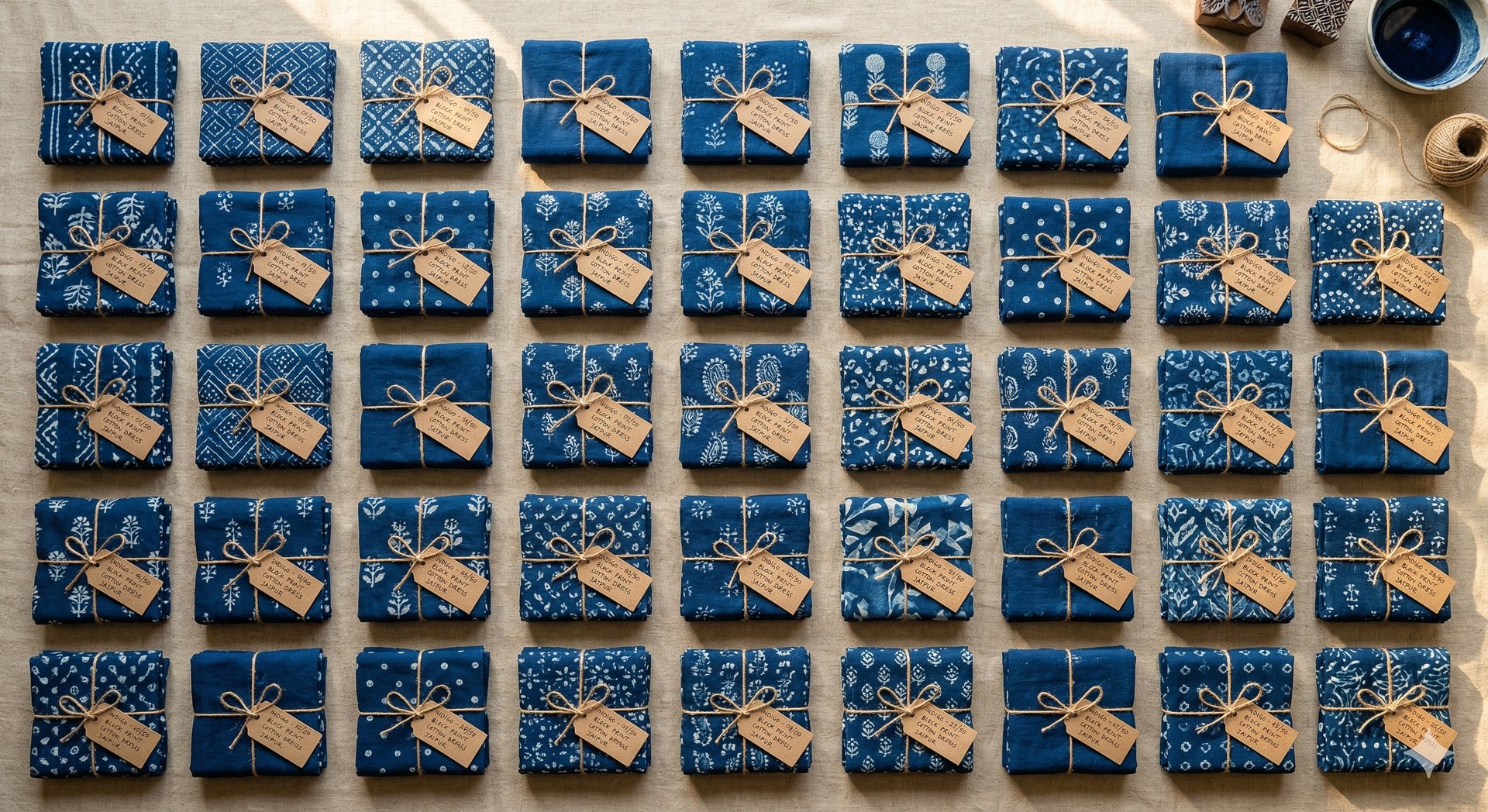
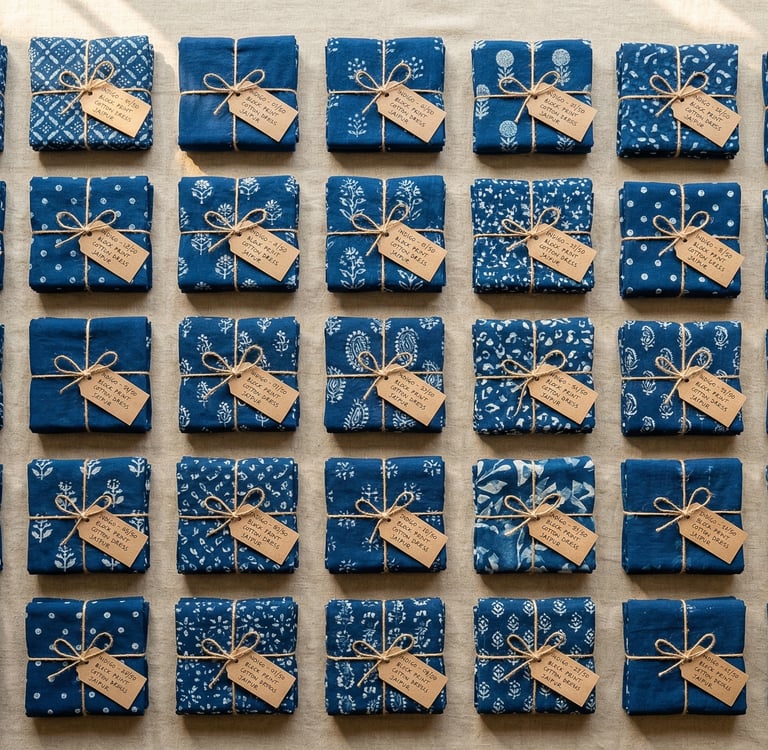
India's clothing manufacturing landscape is fundamentally different. With millions of SME-scale garment units across Jaipur, Tirupur, Surat, and Delhi, there's a natural ecosystem of manufacturers who can handle small orders with genuine competence. Jaipur specifically has an additional advantage: its artisan craft traditions (block printing, embroidery, dyeing) enable the production of genuinely differentiated products in small quantities.
Indian manufacturers in Jaipur can produce a 100-piece mixed-design run with custom block printing, hand finishing, and custom labels — a capability that virtually no Chinese or Bangladeshi factory would match at that volume.
What's a Realistic Low MOQ in India? (Honest Numbers)
Here's what "low MOQ" actually means across different manufacturer types in India:
Artisan / Craft-First Manufacturers (like Ashanari)
MOQ: 50–100 pieces per style
Suitable for: Private label brands, sustainable fashion labels, boho/artisan-positioned brands
Product types: Block print clothing, embroidered garments, handloom fabrics, natural-dye pieces
Standard Garment Factories (SME)
MOQ: 100–300 pieces per style
Suitable for: Startup brands with some capital, brands testing 2–3 hero SKUs
Product types: T-shirts, trousers, dresses, basics with custom labels and trims
Large Export Houses
MOQ: 300–1,000+ pieces per style
Suitable for: Established brands scaling a proven range
Product types: Any — but small brands are deprioritised
For most startup founders, the sweet spot is an artisan or SME-scale manufacturer who can produce 50–200 units at a quality level that justifies a premium retail price. This is exactly the model Ashanari is built for.
How to Structure a Low MOQ Order: Practical Tips
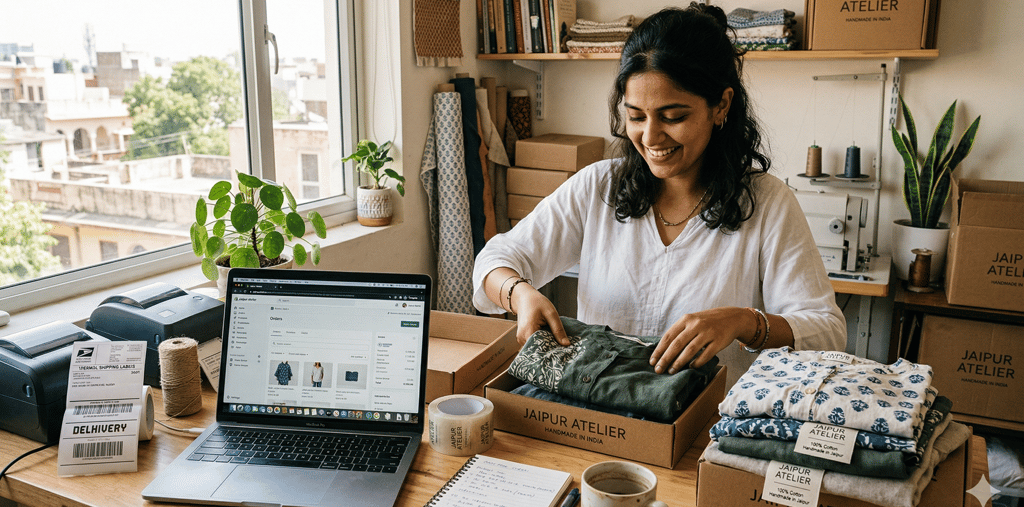
Placing your first low MOQ order is different from placing a bulk order. Here's how to approach it strategically:
Start With a Sampling Order
Before committing to even a 50-piece run, order 1–3 pre-production samples. This validates quality, fit, and construction — and tells you whether this is a manufacturer you can work with. Sampling costs are usually deducted from your first bulk order by reputable manufacturers. Visit our sampling service page to understand how we handle this.
Narrow Your SKU Range
If your MOQ is 50 per style, don't launch with 10 styles on your first order. Start with 2–3 hero products, each in 1–2 colourways. This keeps your financial exposure manageable while you validate the market.
Provide a Complete Tech Pack
Low MOQ orders have less room for iteration error. The more precise your brief — measurements, materials, stitching specifications, label placement — the fewer costly revision rounds you'll need. We've published a guide on creating a clothing tech pack that covers exactly what manufacturers need from you.
Negotiate Payment Terms Carefully
Standard terms are 30–50% deposit upfront, balance before shipment. Some manufacturers offer 30-day payment terms to established buyers. For a first order, expect to pay at least 30–40% upfront — this is standard and legitimate, not a red flag.
50 Units Is All You Need to Start
Ashanari produces from 50 units per style — with full custom design, your labels, your packaging, and your story. Let's build your first collection together.
Low MOQ Clothing Manufacturing for UK, USA, Australia & Europe
The question we hear most from international brands is: "Will a small Indian manufacturer actually ship to me reliably?" The answer, with the right partner, is an unqualified yes.
For UK brands: DDP (Delivered Duty Paid) shipping from Jaipur to the UK is well-established. Air freight to London takes 3–5 days; sea freight 20–25 days. UK brands benefit from India's GSP status on many textile categories (though verify current post-Brexit arrangements). Read more in our dedicated guide on low MOQ clothing manufacturing for UK brands.
For US brands: Jaipur to major US ports via sea freight typically takes 25–30 days. Indian textiles benefit from fewer trade restrictions than Chinese equivalents — a genuine advantage in 2025's trade environment.
For Australian brands: Air freight Jaipur–Sydney runs approximately 5–7 days. Sea freight is competitive. Many Australian sustainable and boho fashion brands already source from Rajasthan — the aesthetic and values alignment is natural.
For European brands: European import duties on Indian textiles are generally low (0–12% depending on category). Germany, Netherlands, and France are active markets for Indian artisan clothing. India's proposed EU Free Trade Agreement, if concluded, would further reduce costs for European buyers.
Red Flags When Sourcing Low MOQ Manufacturers
Not every manufacturer that claims to offer "low MOQ" is set up for it. Watch for these warning signs:
No sample before bulk: Any manufacturer who won't provide a sample is not a partner — they're a gamble.
Vague pricing: If you can't get an itemised cost sheet within 48 hours, their production process probably isn't clear enough to deliver consistent quality.
No prior export references: Ask for export documentation from at least two international shipments to markets similar to yours.
Too-low prices: If the per-unit price seems impossibly cheap, the quality will match. Sustainable low MOQ production has a real cost floor.
Red Flags When Sourcing Low MOQ Manufacturers
Not every manufacturer that claims to offer "low MOQ" is set up for it. Watch for these warning signs:
No sample before bulk: Any manufacturer who won't provide a sample is not a partner — they're a gamble.
Vague pricing: If you can't get an itemised cost sheet within 48 hours, their production process probably isn't clear enough to deliver consistent quality.
No prior export references: Ask for export documentation from at least two international shipments to markets similar to yours.
Too-low prices: If the per-unit price seems impossibly cheap, the quality will match. Sustainable low MOQ production has a real cost floor.
Tell Us About Your Brand
Quantity, design concept, target market, timeline. Send us the details and we'll respond within 24 hours with honest guidance on what's possible and what it costs.
Contact
Reach out for custom orders or questions
call | Whatsapp | email
ashanariindia@gmail.com
Nitin +91-9351612343
Deepti +91-9549123654
Address:
Ashanari Pvt. Ltd.
A-68, Vidhyut Nagar, Ajmer Road, Jaipur,
Rajasthan, India -302021
© 2025. All rights reserved with ashanari pvt ltd
info@ashanari.com