
Private Label Clothing Manufacturer for Europe | India 2025
European fashion brands: discover why India is the private label manufacturing choice for German, French, Dutch and Scandinavian labels in 2025. Low MOQ, artisan quality, EU-compliant production.
REGIONAL GUIDES
Ashanari International Sales Team
5/18/20265 min read
Private Label Clothing for European Brands:
Why India Is the Manufacturing Answer in 2025
European fashion brands face a sourcing challenge that feels, from the inside, like a trap. Domestic manufacturing — whether in Germany, Italy, Portugal, or France — carries quality credentials and regulatory simplicity, but at prices that make viable margins almost impossible for independent brands. Manufacturing in Turkey or Romania is cheaper, but the craft range is narrow, and the sustainability story is harder to tell convincingly. And China, for many European brands, carries both the tariff exposure of an uncertain trade relationship and the "made in China" narrative problem at the premium end of the market.
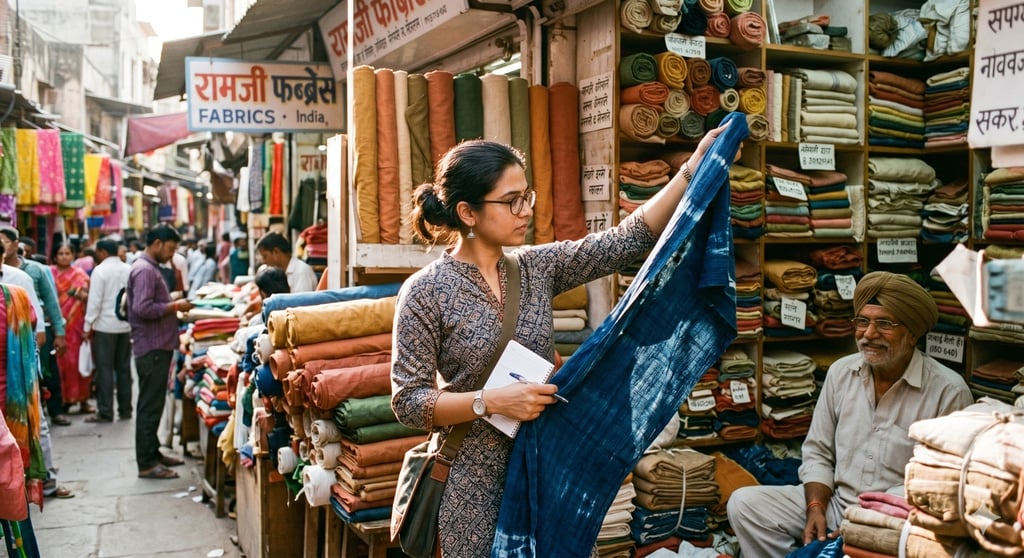
India — particularly Jaipur — is the answer that a growing number of European fashion startups have found. The economics work. The craft is genuine. The sustainability credentials are verifiable. The communication is in English. And the aesthetic alignment with what European consumers are buying in 2025 is, in several categories, near-perfect.
This guide is written specifically for European brand founders: fashion entrepreneurs in Germany, France, the Netherlands, Sweden, Denmark, Belgium, and beyond who are seriously evaluating India as their manufacturing base.
🇩🇪 Germany
🇫🇷 France
🇳🇱 Netherlands
🇸🇪 Sweden
🇩🇰 Denmark
🇧🇪 Belgium
🇮🇹 Italy
What the European Fashion Market Wants in 2025 — and Why India Delivers It
European independent fashion is in a genuinely interesting moment. Fast fashion's credibility is eroding at an accelerating pace — particularly in Germany and the Nordic markets, where consumer research consistently shows willingness to pay significantly more for clothing with verifiable ethical and environmental credentials. French consumers have long associated quality with provenance, and the "fait en Inde par des artisans" (made in India by artisans) narrative carries genuine commercial weight in the French premium boutique market. Dutch and Belgian buyers are among Europe's most sustainability-literate consumers.
What European fashion consumers reward — craft, provenance, sustainability, design distinctiveness — is precisely what Indian artisan manufacturing produces. The aesthetic alignment between Jaipur's textile traditions and what European premium fashion buyers want is not a coincidence. It's the reason why brands from Berlin to Amsterdam to Stockholm are building their labels there.
EU Import Logistics: What European Brands Need to Know
EU Import Duty on Indian Clothing
Under the EU's Generalised Scheme of Preferences (GSP), India qualifies for preferential tariff rates on most textile and clothing categories. Effective duty rates for Indian garment imports to the EU typically fall between 9.6% and 12% for woven clothing and 9–11.5% for knitwear, under the standard GSP arrangement. Note: Always verify current rates with an EU customs broker, as India's EU FTA negotiations may modify these rates. The EU-India Free Trade Agreement, if concluded, would likely reduce most textile duties significantly.
VAT on Imports
VAT is charged on the customs value (declared goods value + insurance + freight) at your country's standard rate: 19% in Germany, 20% in France, 21% in the Netherlands. If your business is VAT-registered, this is fully reclaimable. Non-VAT-registered businesses should include this in their landed cost calculation.
Required Import Documentation
Commercial Invoice (EUR value, HS code, country of origin, buyer/seller details)
Packing List
Bill of Lading or Air Waybill
Certificate of Origin (India) — required for GSP preferential duty claim (REX — Registered Exporter system)
REACH compliance documentation for fabric (required if marketing in the EU)
Customs declaration (your freight forwarder files this)
REACH Compliance for EU Brands
This is the compliance requirement European brands most often overlook when sourcing from India. EU REACH Regulation (EC No 1907/2006) restricts the use of certain hazardous substances in textiles. Specifically, Annex XVII prohibits the use of specific AZO dyes and limits formaldehyde content. Before selling Indian-manufactured clothing in the EU, request:
An AZO dye test report from your fabric mill (OEKO-TEX Standard 100 certification covers this)
A formaldehyde content declaration
Confirmation that no restricted substances from REACH Annex XVII are present
Ashanari uses AZO-free dyes across all production and can provide test documentation for all standard fabrics. REACH-compliant production is built into our process, not an add-on service.


9–12%
EU import duty on Indian clothing
(GSP rates)
5–6
Days air freight Jaipur → Frankfurt/Amsterdam
18–24
Days sea freight Jaipur → EU major ports
0
Agents or middlemen between you and Ashanari
What Each European Market Looks Like — and Why India Works for Each
Germany — Reliability, Documentation, Sustainability
German fashion brand founders value precision. They want a manufacturer who delivers on time, provides complete documentation, and can verify their sustainability claims with real certification — not marketing language. Jaipur manufacturers who hold GOTS certification, operate with documented dye test reports, and have a clear production workflow resonate strongly with German buyers who are, frankly, used to suppliers who can't provide these things. The fast-growing Berlin slow fashion scene, in particular, is actively looking for Indian artisan producers.
France — Craft Story, Aesthetic Differentiation, Artisan Heritage
French fashion culture is built on the idea that how something is made is as important as what it looks like. Jaipur's artisan heritage — 400-year-old block printing traditions, master embroiderers, natural dyeing knowledge passed between generations — is a narrative that French premium fashion consumers actively respond to. "Confectionné à la main à Jaipur par des artisans" is not just a label claim in a French boutique. It's a commercial asset. Several Paris-based independent labels are already sourcing their hero pieces from Jaipur for exactly this reason.
Netherlands and Belgium — Sustainability First, Always
Dutch and Belgian consumers are among Europe's most sustainability-engaged shoppers. The Amsterdam and Antwerp fashion markets have both seen significant growth in independent labels built around verifiable ethical production. For these markets, Ashanari's organic cotton sourcing, AZO-free dye use, and artisan fair-pay commitments are not optional brand extras — they're baseline requirements. Read our full sustainable clothing manufacturing in India guide to understand what documentation and certifications are available.
Scandinavia (Sweden, Denmark, Norway) — Minimalist Aesthetic, Maximum Ethics
The Scandinavian market favours clean lines, neutral palettes, and exceptional material quality — combined with the strictest ethical supply chain expectations in Europe. Swedish and Danish fashion brands source from India successfully when they find manufacturers who can produce the refined, minimal aesthetic Scandinavian consumers expect alongside the ethical production documentation their market demands. Indian handloom fabrics in neutral undyed tones, GOTS organic cotton basics, and linen pieces sourced from Gujarat mills are particularly well-aligned with the Scandinavian aesthetic.
Shipping to Europe from Jaipur: Practical Options
Jaipur exports to Europe regularly and the logistics are well-established. Key routes:
Air freight to Europe: Jaipur → Delhi IGI Airport → Frankfurt (FRA), Amsterdam (AMS), Paris CDG, or Milan (MXP). Transit: 5–7 days. Cost: approximately €5–€8.50 per kg. DDP (Delivered Duty Paid) to European address: available on request.
Sea freight to Europe: Jaipur → JNPT Mumbai or Mundra → Rotterdam, Hamburg, Antwerp. Transit: 18–26 days. Cost: approximately €90–€155 per CBM for LCL (groupage) shipments. Cost-effective for bulk orders above 3 CBM.
💡For European Brands
Request your manufacturer provide all invoices in EUR or with EUR equivalent stated. This simplifies your customs valuation and VAT reclaim processes significantly. Ashanari can accommodate EUR-denominated invoicing for European clients.
How Ashanari Works with European Brands
At Ashanari, our European client base spans sustainable fashion startups in Berlin, artisan-focused boutique brands in Paris, and ethically positioned DTC labels in Amsterdam and Stockholm. We understand what European buyers need beyond good garments: complete REACH compliance documentation, accurate country-of-origin certification for GSP duty claims, AZO-free dye test reports, and clear export invoicing in a format that works with EU customs systems.
Our full manufacturing services include private label production from 50 units, in-house block printing and embroidery, organic and GOTS-certifiable fabric options, REACH-compliant dye processes, and complete export documentation. Read our guide on how to start working with an Indian clothing manufacturer for the complete first-steps process, or go directly to our contact page.
European Fashion Brand? Let's Build Something Worth Wearing.
Share your design concept, target quantity, and destination market. We'll respond with a production proposal, a full cost estimate (including duty and shipping to your EU market), and the compliance documentation your market requires. In English. Within 24 hours.
Contact
Reach out for custom orders or questions
call | Whatsapp | email
ashanariindia@gmail.com
Nitin +91-9351612343
Deepti +91-9549123654
Address:
Ashanari Pvt. Ltd.
A-68, Vidhyut Nagar, Ajmer Road, Jaipur,
Rajasthan, India -302021
© 2025. All rights reserved with ashanari pvt ltd
info@ashanari.com