
Sustainable Clothing Manufacturer India | Ethical Fashion Production
Discover what sustainable clothing manufacturer india really means. Ashanari breaks down ethical production, organic fabrics, artisan craft, and how to verify claims.
SUSTAINABILITY & ETHICS
Ashanari Sustainability Team
4/25/20267 min read
Sustainable Clothing Manufacturing in India: The Truth Behind Ethical Fashion Production
The word "sustainable" has a problem. It has been claimed by so many brands, stamped on so many hangtags, and deployed in so many pitch decks that it has begun to mean everything and nothing simultaneously. A garment dipped in a synthetic reactive dye and shipped 15,000 kilometres in a polybag can be marketed as "sustainable" if the factory installed solar panels on the roof.
This guide cuts through that. If you're building a clothing brand with genuine sustainability values — or if you're a founder trying to understand what ethical clothing manufacturing in India actually looks like in practice, not in marketing copy — you're in the right place. We're going to be specific, occasionally uncomfortable, and completely honest.
🇬🇧 UK Brands
🇪🇺 EU Brands
🇦🇺 Australian Brands
🇺🇸 US Brands
Why India Is the World's Most Important Sustainable Fashion Manufacturing Hub
India's claim to sustainable textile leadership isn't marketing — it's structural. Three factors make India's manufacturing ecosystem uniquely positioned for ethical fashion production:
1. The World's Largest Organic Cotton Supply Chain
India produces approximately 51% of the world's organic cotton — more than any other country by a significant margin. The majority is grown in Maharashtra, Madhya Pradesh, and Rajasthan, with well-established GOTS (Global Organic Textile Standard) certification infrastructure. This means that when an Indian manufacturer tells you they can source GOTS-certified organic cotton, they're drawing from a domestic supply chain — not importing it from elsewhere and adding a premium layer of cost and carbon.
For UK and EU brands facing increasing regulatory pressure around textile sustainability (the EU Ecodesign for Sustainable Products Regulation, the UK's proposed Extended Producer Responsibility for textiles), documented organic cotton provenance is becoming commercially essential, not just ethically desirable.
2. An Unbroken Artisan Craft Tradition That Is Inherently Low-Impact
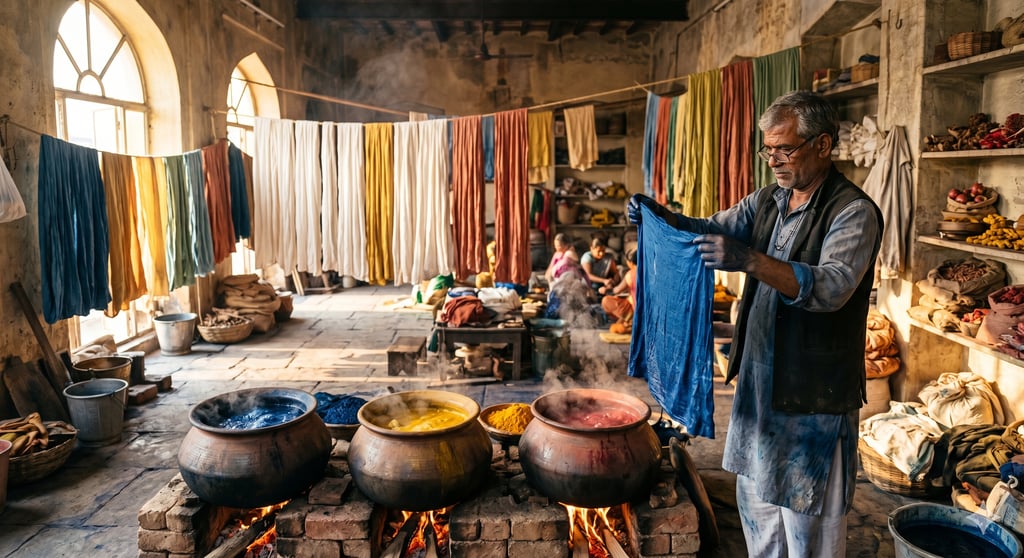
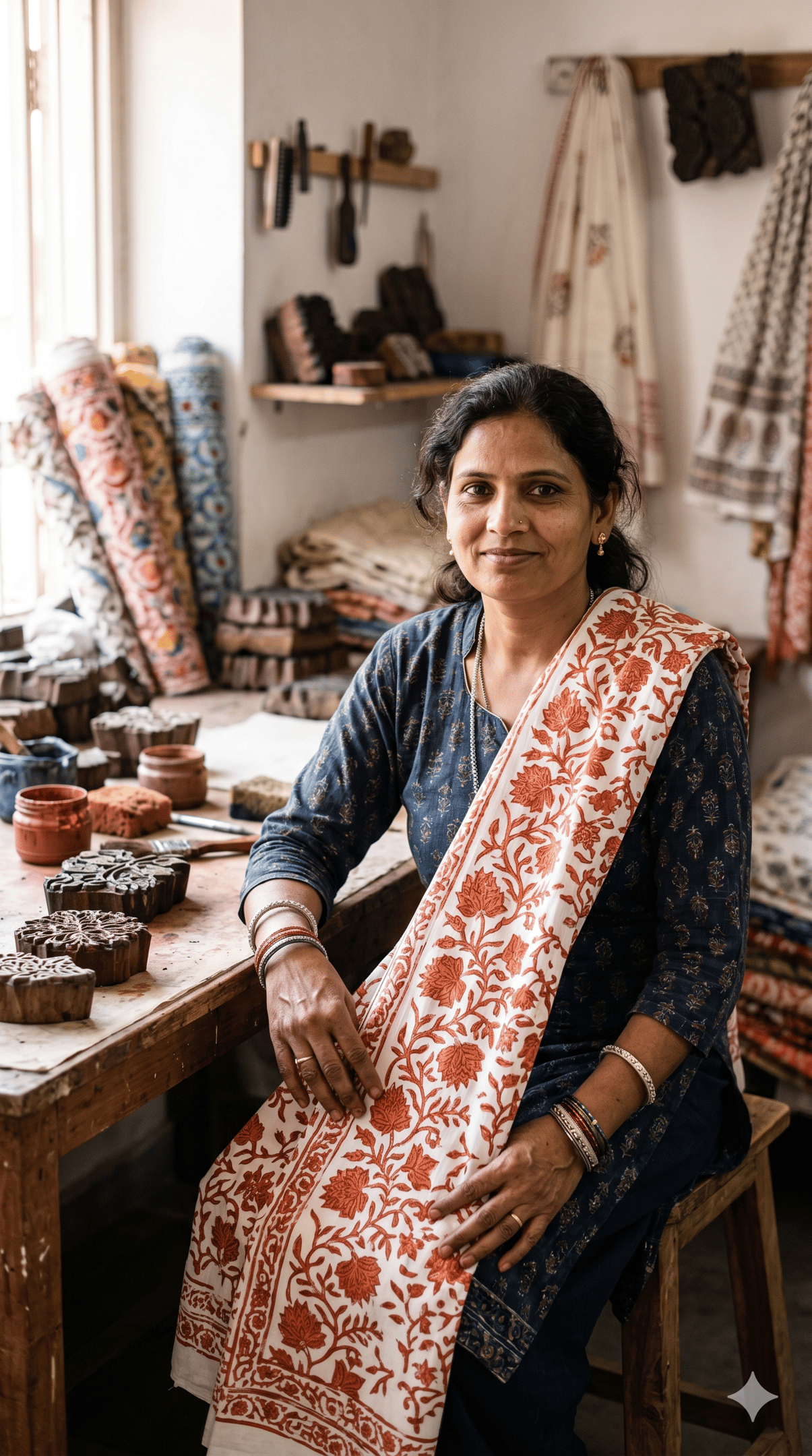
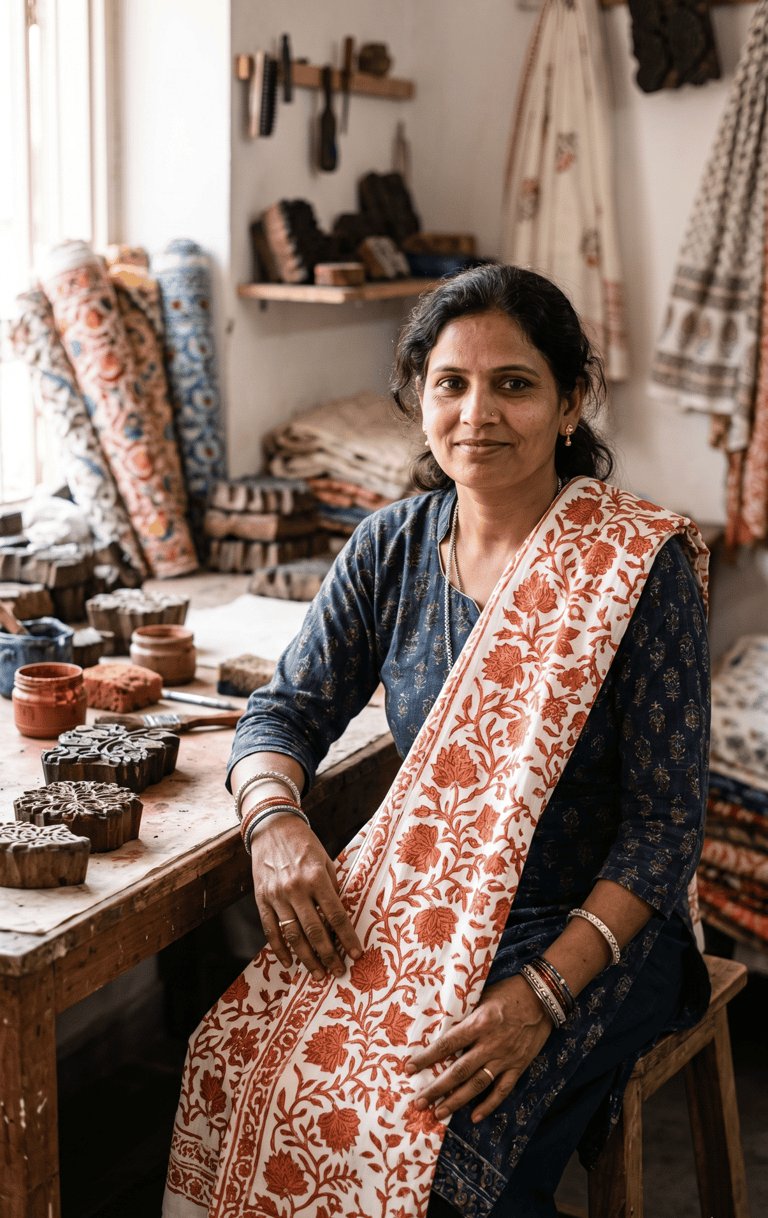
Jaipur's textile artisans — block printers, natural dyers, hand weavers — have been practising their craft for centuries using techniques that are, by design, low-energy, low-waste, and low-chemical. Traditional hand block printing uses carved wooden blocks and natural or AZO-free dyes. Natural dyeing with plant-based pigments (indigo, turmeric, pomegranate rind, madder root) is genuinely biodegradable. Handloom weaving consumes a fraction of the energy of power-loom production.
This isn't sustainability retrofitted onto an industrial process. It's craft that was sustainable before the word existed.
3. A Dense Ecosystem of Certified Manufacturers
India has more GOTS-certified textile facilities than any country except Turkey. OEKO-TEX Standard 100 certification is widespread across Indian fabric mills. SA8000 labour standard certification — less common but meaningful — is available from established manufacturers. For brands that need third-party verified credentials for their supply chain documentation, the certified infrastructure in India is extensive and accessible.
51%
World's organic cotton from India
What "Sustainable Clothing Manufacturing" Actually Covers (The Five Pillars)
Sustainability in garment manufacturing isn't a single practice — it's a framework. Understanding each dimension helps you ask the right questions and evaluate manufacturer claims intelligently.
Pillar 1: Material Sustainability
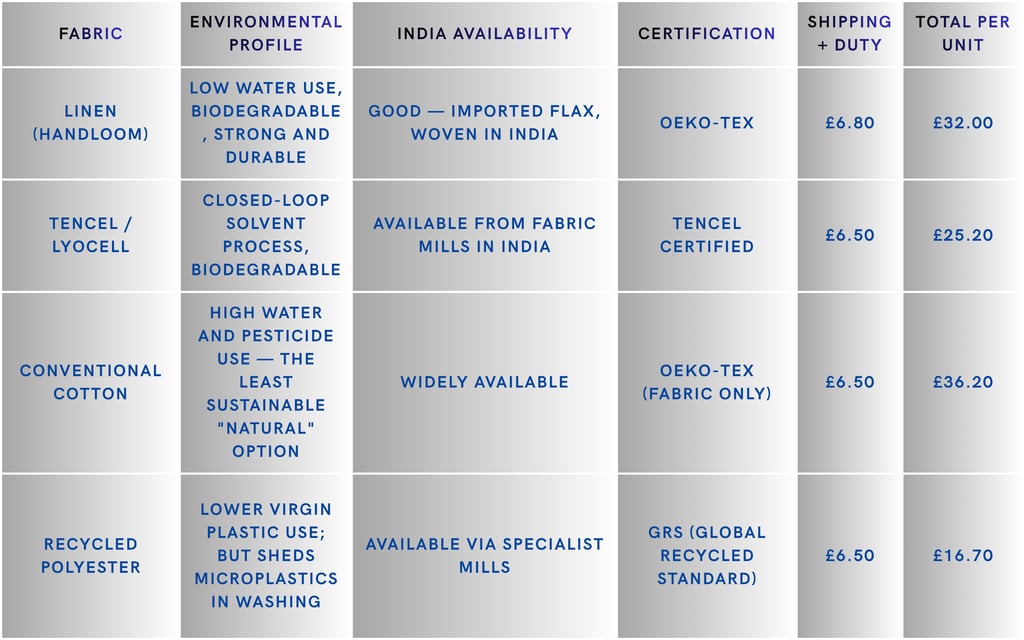
The fibre your garment is made from has the largest single environmental impact in its lifecycle. Key choices and their implications:
1,200+
GOTS-certified facilities in India
400yrs
Jaipur block print tradition
60%
Less water: handloom vs power loom
Pillar 2: Chemical Safety
Conventional garment dyeing is chemically intensive. AZO dyes — widely used in synthetic textile colouring — can release carcinogenic aromatic amines and are regulated under REACH in the EU. For sustainable brands, two standards are relevant:
OEKO-TEX Standard 100: Tests finished fabric for 100+ harmful substances including AZO dyes, formaldehyde, and heavy metals. Certificated products are safe to wear — but the certification doesn't address the environmental impact of the dyeing process itself.
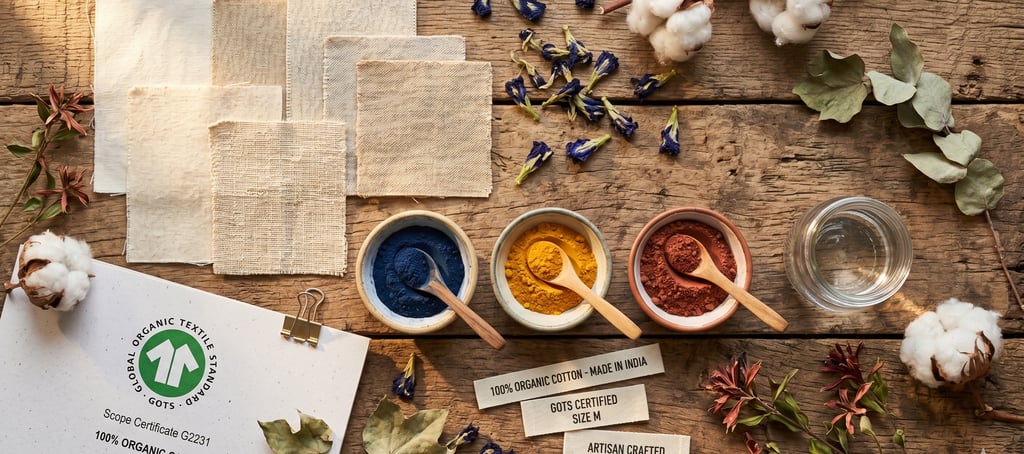
GOTS: Covers both the material (organic fibre) and the dyeing/processing (restricted substance list, wastewater treatment requirements). This is the gold standard for a holistic claim.
Natural dyeing — using plant-based pigments — goes further than either certification because it eliminates synthetic chemicals from the process entirely. Jaipur's tradition of indigo, madder, and pomegranate dyeing is the most chemically benign dyeing practice in global commercial textile production.
Pillar 3: Water Management
Textile dyeing and finishing is one of the most water-intensive industrial processes on earth. India's textile sector has faced legitimate criticism for river pollution from untreated dyeing effluent. This remains a genuine issue in some parts of the industry — honesty requires acknowledging it.
However, manufacturers who have invested in Effluent Treatment Plants (ETPs), who use closed-loop water recycling, or who practice natural dyeing at volumes where wastewater treatment is less complex are operating at a materially different environmental standard. Always ask: "What happens to your dye wastewater?" The answer tells you everything you need to know.
Pillar 4: Labour Standards
Environmental sustainability without fair labour is not genuine sustainability — it's greenwashing with a narrower definition. Key labour benchmarks for clothing manufacturing in India:
Wages at or above the applicable state living wage (not minimum wage — the floor, not the ceiling)
Maximum 48-hour standard working week; overtime voluntary and premium-paid
No child labour — India's Child Labour (Prohibition and Regulation) Act applies; responsible manufacturers go further with active monitoring
Safe working conditions: ventilation, lighting, fire exits, personal protective equipment where applicable
Freedom of association: workers' right to organise without management interference
For artisan manufacturers specifically — where block printers, embroiderers, and hand weavers are often working in craft clusters — fair wage calculation is more complex than for factory workers. Piece-rate work is common in artisan production; ensuring fair remuneration requires manufacturer transparency about how artisan pay is calculated and verified.
Pillar 5: Supply Chain Transparency
Full transparency means knowing not just who made your garment (Tier 1), but who wove your fabric (Tier 2) and who grew your cotton (Tier 3). Most manufacturers can account for Tier 1. Better manufacturers can account for Tier 2. Very few can account for Tier 3 — but the direction of travel in regulatory pressure (EU, UK, US) is toward full chain traceability.

"Sustainable" manufacturers who can't tell you where their fabric came from are not truly transparent. Supply chain transparency is inconvenient and sometimes expensive. Its absence is a sign that the inconvenience hasn't been prioritised.
How to Verify a Manufacturer's Sustainability Claims
The gap between claimed and actual sustainability is widest in the garment industry. Here is a practical verification framework for brand founders evaluating Indian manufacturers:
Request Certification Documents
Ask for copies of any GOTS, OEKO-TEX, SA8000, or BSCI certificates. Verify they are current (most expire annually) and check the certifying body's public database — GOTS certificates are verifiable at global-standard.org; OEKO-TEX at oeko-tex.com. Never accept certificates without verifying their currency and scope.
Ask for Dye Test Reports
Request Azo dye test reports for fabrics from their current production season. A manufacturer who conducts regular dye testing will have these readily available. Request the actual lab report, not a summary or claim.
Request a Virtual Factory Tour
A 20-minute video call walking through production areas, dyeing facilities, and worker areas tells you more than any document. Look for: natural light, ventilation, cleanliness, worker PPE, and whether workers appear comfortable interacting with management on camera.
Speak to Existing Clients
Ask for 2–3 client references from brands in your market who have placed at least 3 orders. Ask them specifically: "Were the sustainability claims you were given borne out in the production reality?" References who have ordered multiple times are the strongest quality signal.
Commission a Third-Party Audit (For Significant Orders)
For orders above £10,000 or for brands whose sustainability claims carry regulatory weight (EU Ecodesign compliance, for example), a third-party social audit from QIMA, Bureau Veritas, or SGS provides independent verification. Cost: typically £300–£900 per facility audit.
What Ashanari Offers — And What We Don't Claim
We believe that honesty is the first principle of ethical manufacturing. So here is our transparent statement of what Ashanari offers, and where we are still working toward higher standards:
What we can currently offer: AZO-free dyes across all production, organic cotton sourcing on request (we work with GOTS-certified fabric mills), natural dyeing using plant-based pigments for appropriate collections, above-minimum-wage pay for all artisans and workers, zero child labour policy with active monitoring, in-house block printing with no chemical discharge — our block print atelier uses water-soluble AZO-free pigments and has a closed-loop water management system, direct fabric sourcing transparency to Tier 2 (fabric mill level) for all standard production runs.
Where we're still working: Full Tier 3 (cotton farm) traceability is an ongoing effort — we currently have documented Tier 3 traceability for our organic cotton lines but not yet for all conventional cotton. Formal GOTS certification for our facility is in progress. We will not claim it until it is achieved.
This kind of specificity — what we do, what we're working on, what we're honest about — is what genuine sustainability looks like from a manufacturing partner. Read our companion piece on what "ethical clothing manufacturer" actually means for a deeper framework on evaluating manufacturer claims, and explore our full manufacturing services to understand what's available for your brand.
Build a Brand Your Customers Can Believe In
Tell us about your sustainability goals — the certifications you need, the fabrics you want to use, the story you want to tell. We'll give you an honest assessment of what we can deliver, and a production proposal that aligns your values with viable economics.
The Commercial Case for Sustainable Manufacturing
If the environmental and ethical case isn't sufficient motivation, consider the commercial reality: UK consumers in the 18–35 demographic are willing to pay 15–25% more for clothing from brands that can demonstrate genuine sustainability credentials. EU's incoming mandatory sustainability labelling will soon require documented evidence, not just claims. Australian consumers consistently rank sustainability among their top five brand selection criteria for independent fashion labels.
Sustainable manufacturing isn't a cost centre for forward-thinking brands — it's a margin driver and a regulatory hedge. The brands that build verifiable supply chain credentials now will have a material competitive advantage as transparency requirements tighten across all global markets in the next 3–5 years.
For UK brands specifically, see our guide on sustainable clothing suppliers for UK and Australian brands — a direct comparison of sourcing options and their real-world cost implications.
Sustainability Is a Strategy — Let's Build It Together
Whether you're launching your first ethical collection or scaling a certified sustainable range, Ashanari has the production capability, fabric sourcing relationships, and artisan expertise to make it real. Let's talk.
Contact
Reach out for custom orders or questions
call | Whatsapp | email
ashanariindia@gmail.com
Nitin +91-9351612343
Deepti +91-9549123654
Address:
Ashanari Pvt. Ltd.
A-68, Vidhyut Nagar, Ajmer Road, Jaipur,
Rajasthan, India -302021
© 2018. All rights reserved by Ashanari Pvt. Ltd
info@ashanari.com